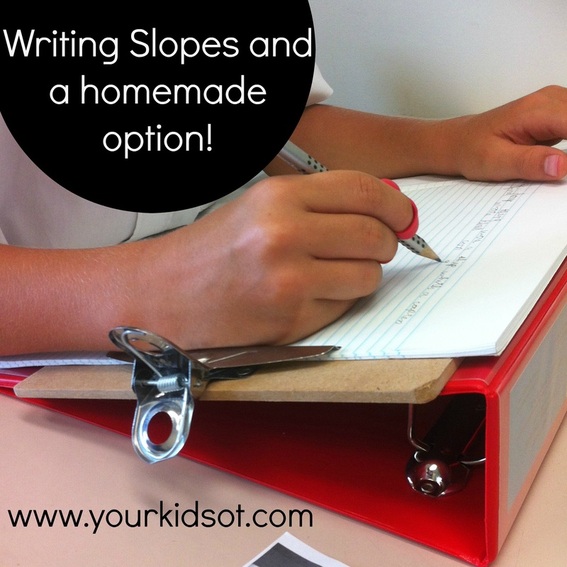
  Using a sloped desk is nothing new! Victorian school classrooms had desks like the one below. These school desks were designed with a slight slope to help the child to write comfortably (no comment about the fixed chair being too far from the table). 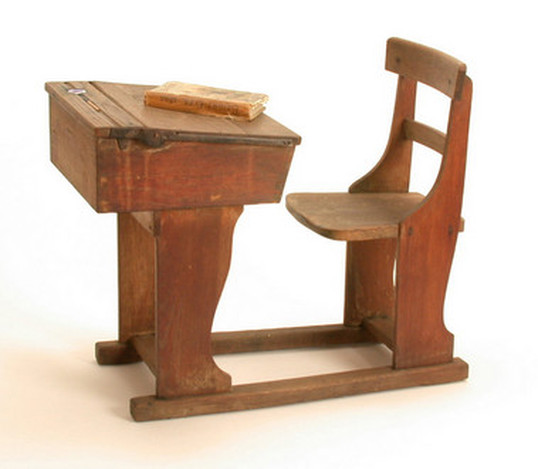 Image found at http://www.objectlessons.org/ The designers of these school desks understood some of the ergonomics of writing. The slope encourages good posture for the student bringing the work closer to look at. The slope provides support to the child's wrist {in slight extension) and forearm to encourage fluent writing {imagine what the "pencil grip" of a quill may have been!}. There are many products on the market now with "slopes" to encourage the same things the school children of the Victorian era experienced. These are available to both adults and children, for writing and computer keyboards and tablets. Here are a few writing slope options. 1. Windmill Desk Top Writing Slope $49.95 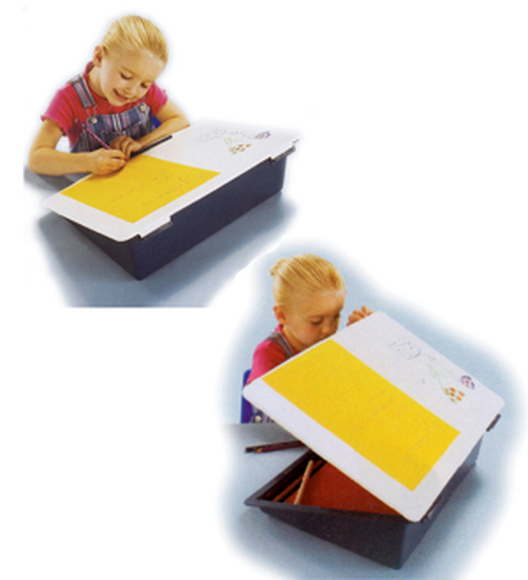 Windmill Desk Top Writing Slope 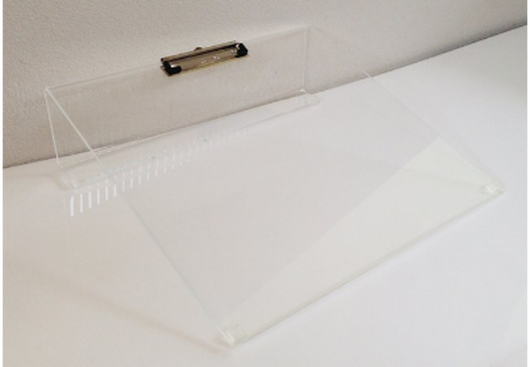 Pencil Grips Plus Perspex Writing Slope Board 3. Make your own using 3 easy items.
Simply assemble and you are ready to use it! This is definitely an economical way to make a slope board and is perfect for those wanting to try out a slope board before paying for a longer term item. This homemade version cost me less than $15. 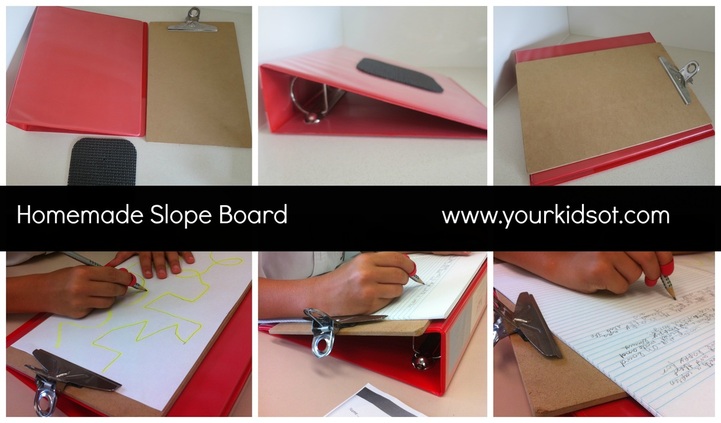  Does your child hold their head too close to their work? Does your child "hook" their wrist when writing? Does your child rotate their arm when holding a pencil? Does your child tend to move their arm as a whole unit rather than using the "skilled side" of their hand? Your child may benefit from writing on a vertical surface (such as a whiteboard) or using a slope board to support their wrist and forearm. Have you tried a slope board? Have you tried making your own?  Note: I have not received any renumeration for the products in this article. You may also like:
Kenna
9/3/2015 04:08:28 am
What size binder would you suggest? 9/3/2015 04:48:34 am
I used a 50mm binder (height) which has 3 rings inside and fits A4 paper. Comments are closed.
|
AuthorHi, I'm Cindy and I am an Occupational Therapist. I enjoy working creatively with children to see them reach their potential. Read more about me here. 
SEARCH THIS SITE
Archives
June 2024
Categories
All
Popular Posts
 |
 RSS Feed
Join the YKOT e-newsletter!
Subscribe to get our latest content by email and receive
the SHAPE ROADS PRINTABLE NOW!

Join our Mailing List!
Subscribe to get our latest content by email and receive
the SHAPE ROADS PRINTABLE NOW as a thankyou!
Disclaimer: The information on this site is general in nature and should be used for educational and entertainment purposes. The activities are safe for most children, however, you should consult an Occupational Therapist or health professional to address specific movement, sensory or other medical conditions. This blog does not replace formal therapeutic professional advice given by a health professional or medical practitioner. Reviews and endorsements of products will only be made based on my expertise and personal opinion; and deemed worthy of such endorsement. The opinions shared in sponsored content will always be my own and not that of the advertising company or brand. Content, advertising space or posts will be clearly identified if paid, affiliated or sponsored. Affiliate links may be found throughout this website in advertising. This means that if you follow through with a purchase from these links, Your Kids OT will receive a percentage of the sale. Your Kids OT undertakes to meet the requirements of the "Social Media Policy" as published by Australian Health Practitioner Regulation Agency (AHPRA). Further information about this policy can be found here.
Find meFollow me |
|
About me
AuthorHi, I'm Cindy and I am an Occupational Therapist. I enjoy working creatively with children to see them reach their potential. Read more about me here. 
|
Copyright © 2017 Your Kid OT