|
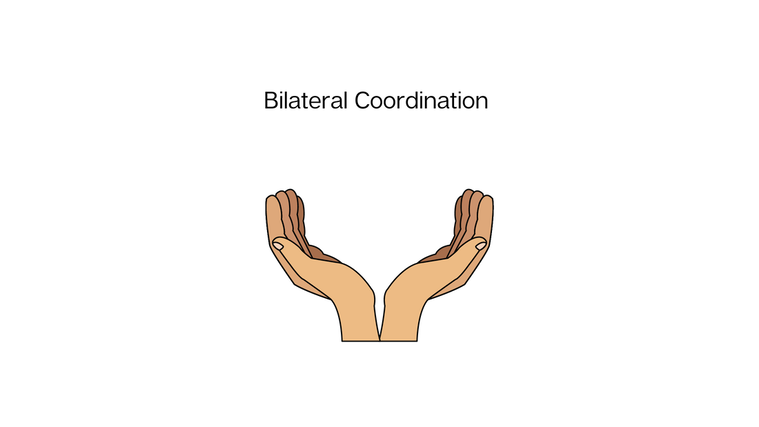
Bilateral coordination is the ability to use both sides of the body at the same time in a coordinated way. This action may be symmetrical where both sides of the body are doing the same action (eg. using a rolling pin or jumping) or where movements are alternating (eg. walking).
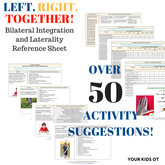
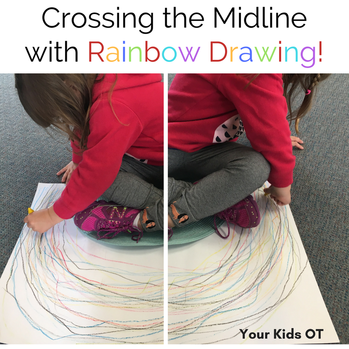
As a child develops good bilateral coordination they can move one side of the body whilst stabilizing themselves or an object with the other side (eg. hopping or cutting). Crossing the midline is an important aspect of bilateral coordination. This is the ability to move a part of the body (such as a hand or foot) into the space of the other half of the body. For example, when a child sits cross-legged on the floor or draws a horizontal line across the page without having to change hands in the middle. Good bilateral coordination leads to an awareness of the two sides of the body, selection of one side as dominant and a sense of right and left discrimination. Bilateral coordination is important for the development of many fine and gross motor skills. Left Right Together: Bilateral Integration and Laterality Reference Sheet includes an explanation and over 50 activity suggestions related to bilateral coordination. You will find further explanations and lots of activity suggestions for the development of bilateral coordination below.

Make Spring Flowers
|

Affiliate Links
|
%20or%20where%20movements%20are%20alternating%20(eg.%20walking).%20%20)