
|
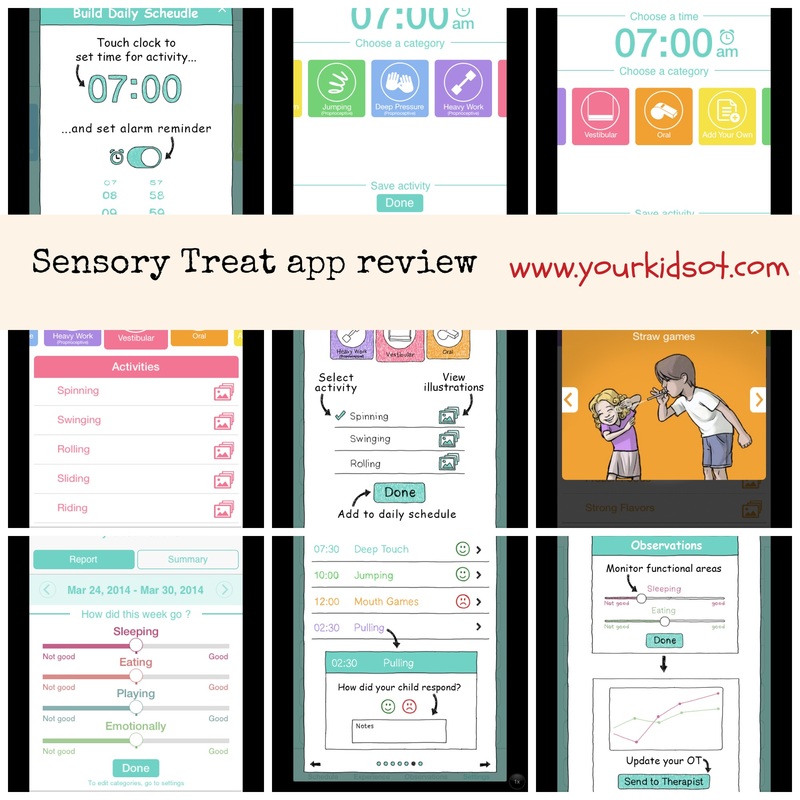
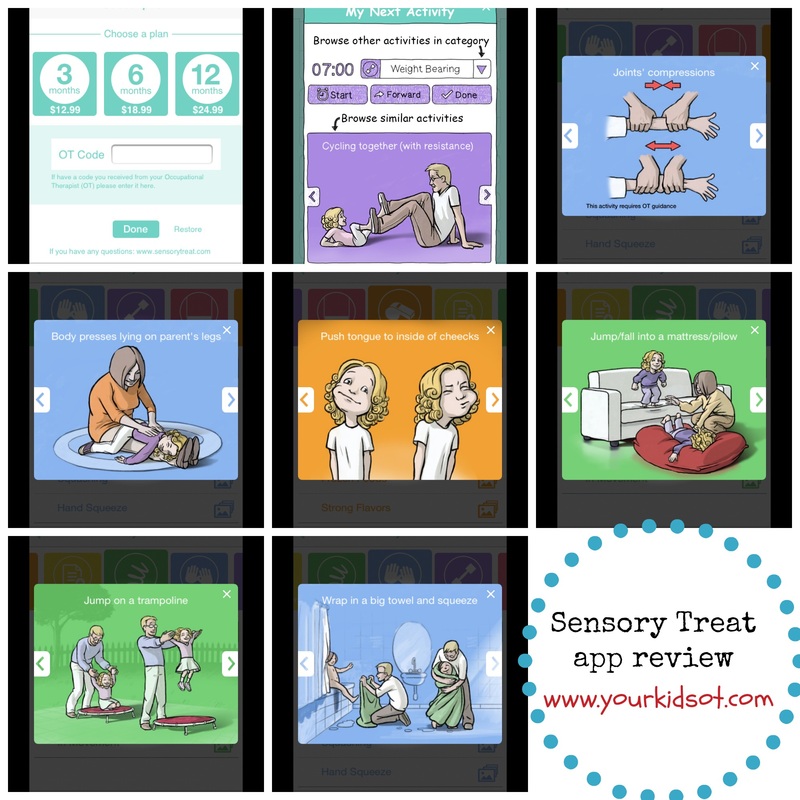
To finish a week of Sensory Processing articles, here is a review of a practical app called Sensory Treat. This app is designed to incorporate your sensory diet activities into your daily lives. 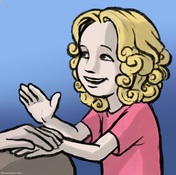 Sensory Treat by Sensory Treat Ltd. Cost: Free (trial period and then fee via subscription $9.99 for 3 months).
This is an amazing app that was designed by parents of children with Sensory Processing Disorder (SPD). Hadas and Oren Steinberg were given a sensory therapy home program for their son to incorporate into their lives as a family. This included a sensory diet of activities with 2 to 3 hour intervals between activities. (Read more about sensory diets here). When their daughter was diagnosed with SPD, they looked for an alternative way to manage the sensory diet and OT paperwork. This is when they developed the Sensory Treat app. The Sensory Treat app is packed with useful things to help you, your child and your therapist to manage a sensory diet. Some of the features that you will find useful are:
I can envisage OTs and parents collaboratively looking at this app to set up activities for their child's sensory diet. What a great organisational tool! I took so many screen shots of this app that I had trouble choosing the best ones to include as they were all great. For more information see the video below (if you are reading this in an email, click on the title of this post which will take you to a live webpage) or make sure you look at the Sensory Treat website which is full of useful information. I have not seen another app or program like Sensory Treat and would highly recommend downloading it if you are a therapist or parent with a child with Sensory Processing Disorder. Have you tried Sensory Treat? If you have, I would love to hear about your experience using this app!  Note: I have received no remuneration for this post and all comments made are my own.
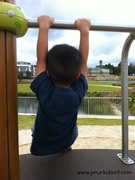
Proprioception: Heavy Work
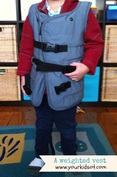
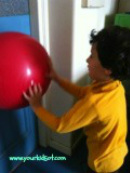
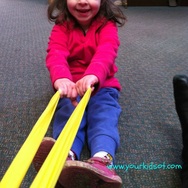
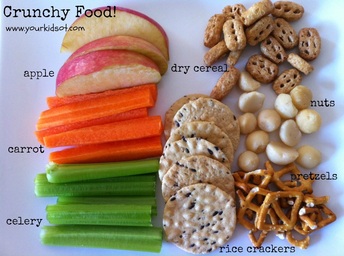
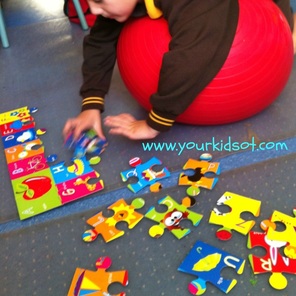
Activities where the body has input to the muscles and joints. This may involve lifting, pushing, pulling objects and a child's own body weight. {Read more here}.
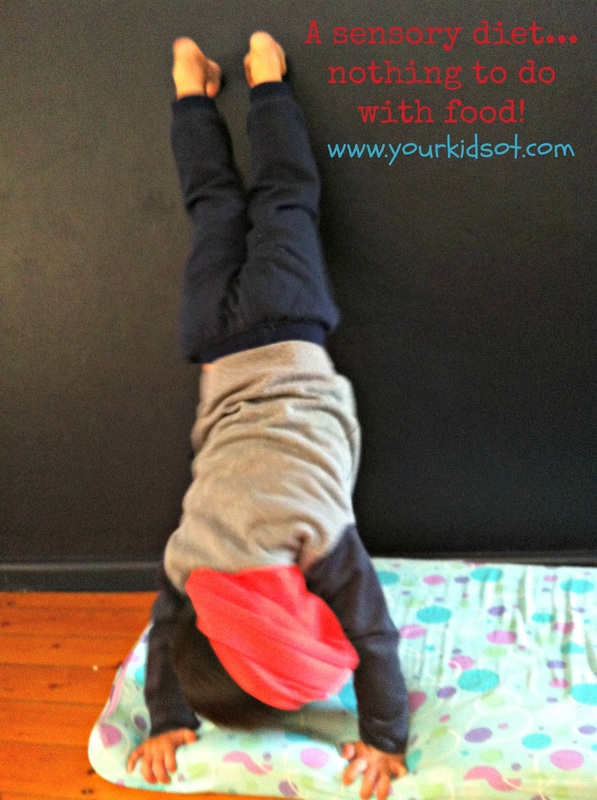
A “sensory diet" aims to help a child level it all out and cope. Different authors describe this in different ways.... "modulating" or "regulating" or "getting their engines ready", etc. If you are concerned that your child may have a sensory processing disorder, contact an Occupational Therapist for an assessment. The assessment typically involves an interview and questionnaire completed by parents and teachers as well as observation of your child.
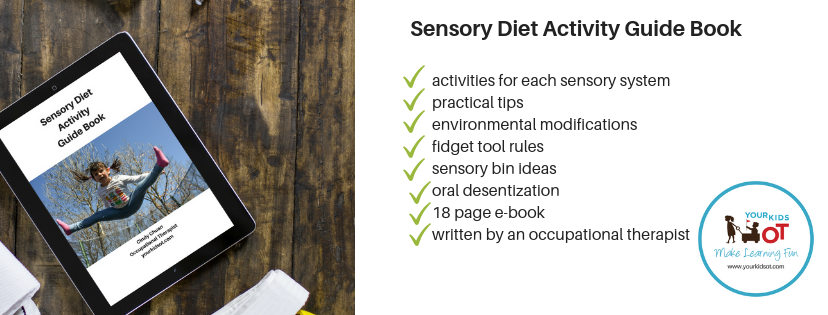
The following are examples of activities that may be included in a "sensory diet" in a home environment where specialised equipment may not be available. These activities are generally suitable for all children, however, professional advice should be obtained if you are uncertain (particularly with the vestibular system) about which activities or combination of activities to try. Consideration should also be made regarding your child's age and cognitive abilities. The activities have been categorised but also be aware that all the sensory systems are connected so one system may affect another. After trialing the activities with your child, make note of the affect of the activities. Does it calm your child, arouse them, over arouse them? Use this resource to help work out which activities work for your child. ——->Activities for me! There are over 100 activities that I have put together here so if you are overwhelmed don't feel like you need to try them all today. Two great resources now available so you can print out activity suggestions! This are practical resources for parents, teachers and therapists! Read more about the Sensory diet activity reference sheet (similar to the activities listed here) and a more detailed Sensory Diet Activity Guidebook (includes explanations about each sensory system and activity suggestions)! 
Activities for a sensory diet...
Vestibular: Sense of movement and balance
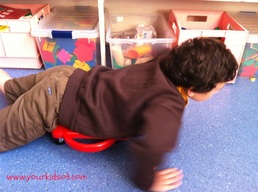
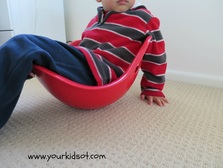
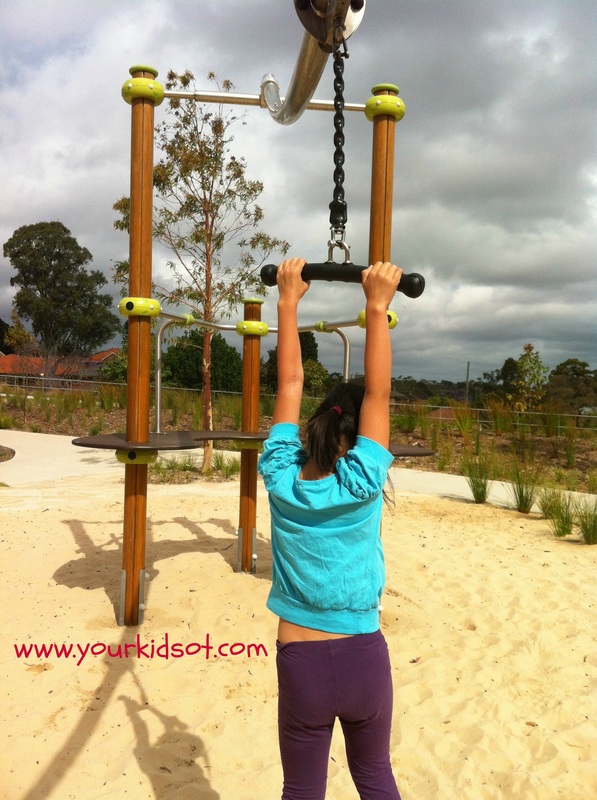
Movement stimulates the receptors in the inner ear {including spinning, swinging and hanging upside down}. Head position is an important consideration during these activities.
Tactile System: Sense of touch
The tactile system discriminates touch (what and where touch occurs on the body) and processes for danger (fight or flight response). Tactile input can involve deep pressure of the skin, muscles and joints (see Proprioception activity suggestions). It may also involve modification to the environment.
Visual System: Vision
The visual system can be overwhelmed by what is seen. The most helpful way to assist the visual system is to modify the environment {eg. reduce clutter, present one item at a time, remove unnecessary information from a whiteboard, position the child at the front of the classroom, watch a snow globe, etc).
Auditory system: Hearing and listening
The auditory system is required to process what and how something is heard.
Olfactory: Smell
The sense of smell can also affect emotions, behaviour, memory and thinking as the nose receptors are connected to both the limbic system as well as the cortex. Finding the smells that calm, arouse and over arouse will help to plan how to avoid or incorporate these smells into your child's routine. Essential oils can be added to homemade playdough or cloud dough. Dried flowers can be made into sachets for clothes. Washing powder can be chosen or avoided.
Taste
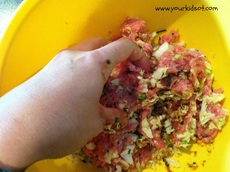
The taste sense in also strongly linked with the sense of smell and oral sensitivities (see also Proprioceptive Oral activities). Taste is also linked with experience as many flavours may be accepted after repeated trials. Involve children in meal preparation, gathering ingredients and presenting the food. 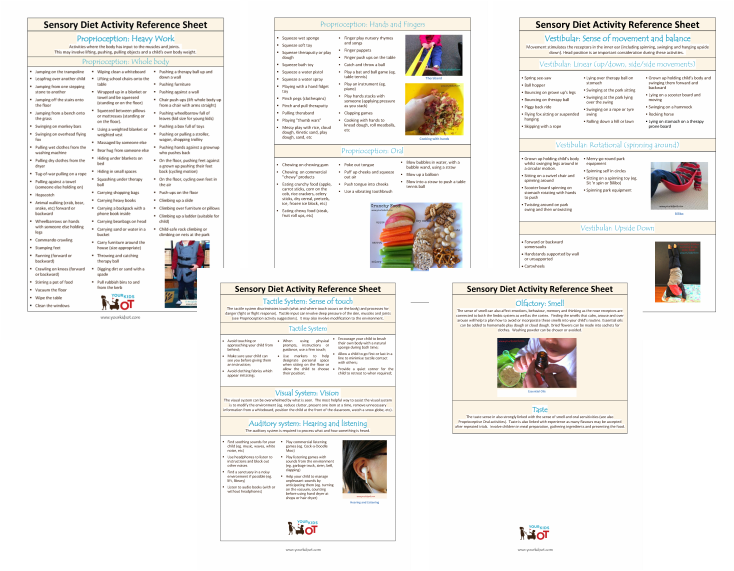
This week I'm looking at Sensory Processing issues. You may want to read some of my previous posts before reading this week's articles...start here.
This post will outline some general strategies that you may try at home or in the classroom. Mailloux (1992) describes these strategies as a way you can help your child to normalise the way the nervous system registers and interprets touch information.
Lane, S. & Royeen, C. (1991). Tactile processing and sensory defensiveness. In Fisher, Murray, & Bundy (eds.), Sensory Integration Theory and Practice. Philadelphia: F.A. Davis Company.
Mailloux, Z (1992). Tactile Defensiveness: Some People are More Sensitive. Sensory Integration Quarterly, Vol XX, No.3, pp 10-11 

Louise is a mum of 2 children living in Sydney, Australia. This is her experience of how sensory processing affects her son and how Occupational Therapy helped him.
Q1. What were some of the concerns you had for Tom that you felt needed to be addressed? Since Tom was a toddler there were things about Tom that seemed a bit odd, that we just put down to his personality, and the fact that all kids are different. As a toddler he never liked rough games, and couldn’t stand being put on a swing. At preschool the staff felt things didn't seem quite right and asked the Early Intervention Team to come and assess him, but the team determined he was developmentally age appropriate. Q2. What treatment or advice did you seek initially? Tom’s Year 2 teacher was special needs trained, and immediately had concerns about him. She wanted us to get his hearing tested, and to see a paediatrician. Tom’s hearing test came back as normal. The paediatrician read the letter from Tom’s teacher and had me fill in a checklist of about 10 items. After the half hour appointment he diagnosed Tom with ADD, wanted us to get an ECG (to check his heart was OK), and if his heart was good he would start him on Ritalin. The next day I spoke with Tom’s teacher, who indicated she didn’t believe he had ADD, but suggested we keep looking for a different answer. We then saw a paediatric clinical psychologist who spent 2 hours with Tom, and gave us and his school teacher very comprehensive forms to fill in. Her assessment was that Tom had no developmental disorders. At this stage Tom was fed up with going to different people, so we stopped investigating.
Q4. How was Tom assessed and what was identified as Tom’s difficulties by the OT?
Tom had a two hour assessment, which consisted of formal tests – some pen/paper tests, some tests with headphones on, some physical based tests, as well as unstructured time “playing” where he was closely observed. I was also interviewed about my understanding of Tom, and his school teacher had some reports to complete also. After that, three main areas of concern were identified: Tactile (touch) defensiveness – Tom was over responding to touch sensations, finding them unpleasant Auditory (sound) processing problems – Tom was over responding to auditory sensations, and not filtering out unimportant noises. Apparently we are supposed to focus more on sounds in the human voice range, and be able to block out background noise, but Tom wasn't able to do that. Vestibular (movement) processing problems – This was observed as he “played” on things like climbing frames, hammocks, and balls. There were some things that he avoided that were too uncomfortable for him, but of the activities he did do they wound him up and almost made him “hyper”. Q5. What “treatment” did Tom receive? What did Tom think of this “treatment”? For tactile defensiveness – we were given a brushing program, which meant we had a soft brush that we had to systematically rub over his skin. Initially it was every hour (during school holidays) but then dropped back to a couple of times a day. Tom hated it at first, for him it felt like it was hurting him, but in time it became quite a calming thing for him. Auditory processing problems – We were given a CD listening program, which was designed to settle his sensory system, and help with his auditory processing. It was strange music with odd mixes of frequencies. He had to wear headphones with the music playing at breakfast and at dinner time. He had to carry on normal conversation, with the music in the background, teaching his brain to filter out the unimportant noise. Again with this, Tom found it very unpleasant at first, but it became something he was happy to do in time.
Tom was also offered a position at Camp Jabiru (run by the Sensory Gym), a week long camp for kids with sensory processing problems. The idea was that they would try different activities in a supported environment. Tom did this in Year 4, and had to be physically restrained for us to leave, as he was so anxious. He had a fantastic week though, and was able to draw a lot of confidence from it. He opted out of the high ropes course, but did a range of things including canoeing, rock climbing, and the low ropes course. It meant that when his first school camp happened in Year 5 that he had already had the experience of being away from home, and doing different things. He went on school camp feeling like he could do it, because he had “success” on Camp Jabiru.
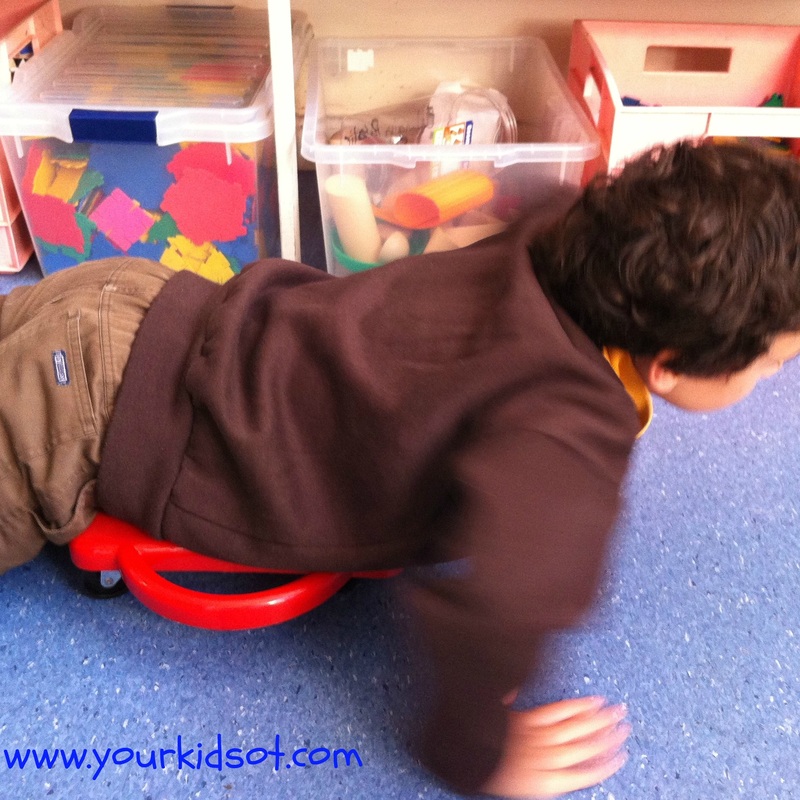
General sensory integration – to help with general sensory integration we were given a sensory “diet”, a routine of activities designed to help his sensory system be settled. It involved things like bear crawls, and tug of war with a towel, and lifting up the lounge. We tried to do these things each morning before school to settle his sensory system. Some of these activities he enjoyed more than others. 4 years later when he is unsettled, he will initiate these sorts of activities – he will occasionally pick up the table a few times, or wrap himself up tightly in his bed sheets. Q6. Did you see any progress during the time of “treatment”? After 12 months Tom was discharged from the program. He made great progress with tactile defensiveness, was more focused in conversation and at school as his auditory processing was improved, and coped much better with movement activities. Q7. Do you think Tom’s treatment has had long-term benefits in the way he processes sensory information? It was explained to us that Tom would not be “cured”, but that he would be more able to manage his sensory issues. With tactile processing – 4 years later, Tom is much more able to tolerate strange and different sensations. There still are issues at times, like this year with the change into winter uniform, and the button at his neck and the buttons on his wrists “hurt”. He still interprets someone bumping into him, or treading on his foot, as them hurting him and reacts more than another child would. As parents we can now understand, and respond more helpfully to him. He also has more skills to manage this too. With auditory processing - Tom is now able to be quite focused in class, and is doing well academically. There are times when he is unsettled, that I need to work to get his attention, but on the whole he is managing well with focusing attention. With vestibular processing - Tom is now much more able to be involved in physical activities and doesn’t have the same anxiety stopping him. He is still careful with rides at shows and theme parks, and will assess carefully beforehand if it is something he thinks he can manage. He is able to get involved in school and youth group camps well, and generally participates as would be expected. Q8. Is there anything else you would like to share with other parents or teachers about sensory processing? Sensory processing disorder is tricky to get a diagnosis for, as it is not widely recognised by the medical community. The process of being sent from person to person, trying to get someone who knows what is going on, is hard both for you as the parent and for your child. It is hard as a parent because at times it seems like you have a difficult or naughty child who refuses to participate and communicate appropriately. It is hard not to think of yourself as a “bad parent”. Thankfully, Occupational Therapists who specialize in Sensory Processing Disorder do have lots of tools to help our kids function more effectively. We were recommended a book which was also very helpful “The Out-of-Sync Child – recognizing and coping with Sensory Processing Disorder – by Carol Stock Kranowitz”. My hope as a parent is that I can love Tom well, learn all that I can about him, and learn how to support him to be as independent as he can be.
Note: Photographs included in this blog are general in nature and are not of "Tom". This page contains affiliate links.
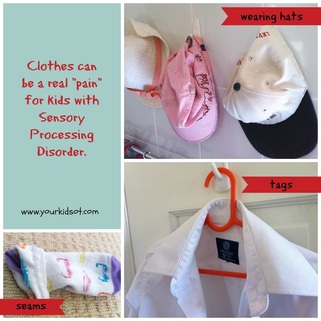
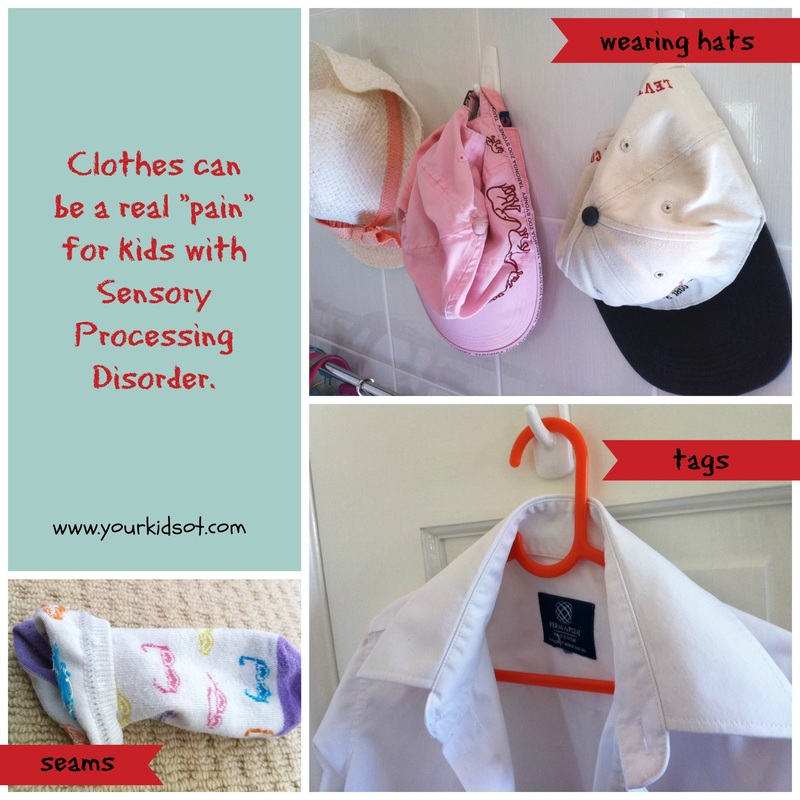
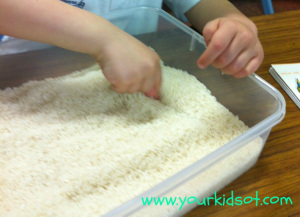
Some children will gradually tolerate these sensations as they "brave" repeated exposure. Eventually they don't react to these sensations and may seem as if they have always loved these sensations. Other children find it really difficult to interact with these sensations. It is almost as if they are having a pain response to this touch. We call this "tactile defensiveness". Tactile defensiveness refers to the pattern of observable behavioural and emotional responses, which are aversive, negative and out of proportion, to certain types of tactile stimuli that most people would find to be non-painful (Lane & Royeen, 1991). Tactile defensiveness may also be seen with complaints about clothing {the labels, certain textures, length of sleeves}, emotional responses to anticipated touch {avoiding crowded environments, tickles or hugs} and aversion to being helped with some daily activities {such as brushing teeth, nappy changes, nose cleaning}. These are just a few examples. A child who experiences tactile defensiveness may benefit from an overall sensory integration assessment by an Occupational Therapist if this is interfering with their ability to participate in the classroom or to complete daily activities at home. In this post I will look at how you may assist a child who avoids play activities involving tactile materials. This looks at just one sensation they may be avoiding at a time. I will discuss some general strategies to try with tactile defensiveness in a future post. You may like to prepare hands and feet by massaging them with your hands or using a small toy that has a vibration. A tapping or clapping game prior to sensory play with hands will also help prepare your child by helping to be aware of their arms and hands. Example: Sand or rice play with hands The progression begins with asking a child to take toys from the surface of the sand/rice (where they don't need to touch the sand or rice), then half burying the item in the sand/rice, and finally burying into the sand or rice.
Notes:
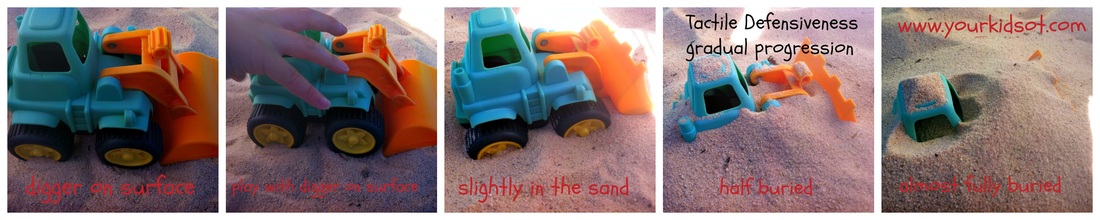 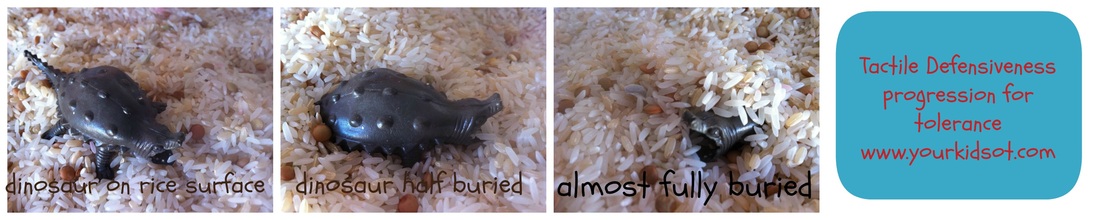 If your child is more sensitive with one body part (eg. hands) compared with other parts of the body, you may introduce a new sensation to less sensitive body parts (eg. elbows, forearm, etc). You may be able to incorporate pouring and scooping at some point in addressing your child's play. It is preferable if your child does this independently rather than someone else pouring it over them. Have a go at these simple, gradual introductions to these touch sensations. This may be a slow process as children have different levels of tolerance. A child may become tolerant of one texture quicker than with another. Is your child sensitive to touch?
Lane, S. & Royeen, C. (1991). Tactile processing and sensory defensiveness. In Fisher, Murray, & Bundy (eds.), Sensory Integration Theory and Practice. Philadelphia: F.A. Davis Company.
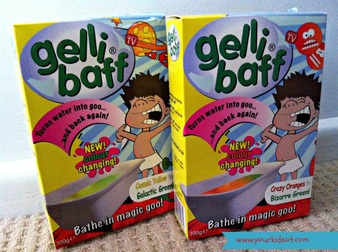
Earlier in the year a friend told me about "Gelli Baff" ... a product that turns water into a jelly-like goo and back into water. I searched for it in lots of stores but couldn't find it at any of the listed suppliers. I stumbled across "Gelli Baff" at my local toy store when they discounted it recently.
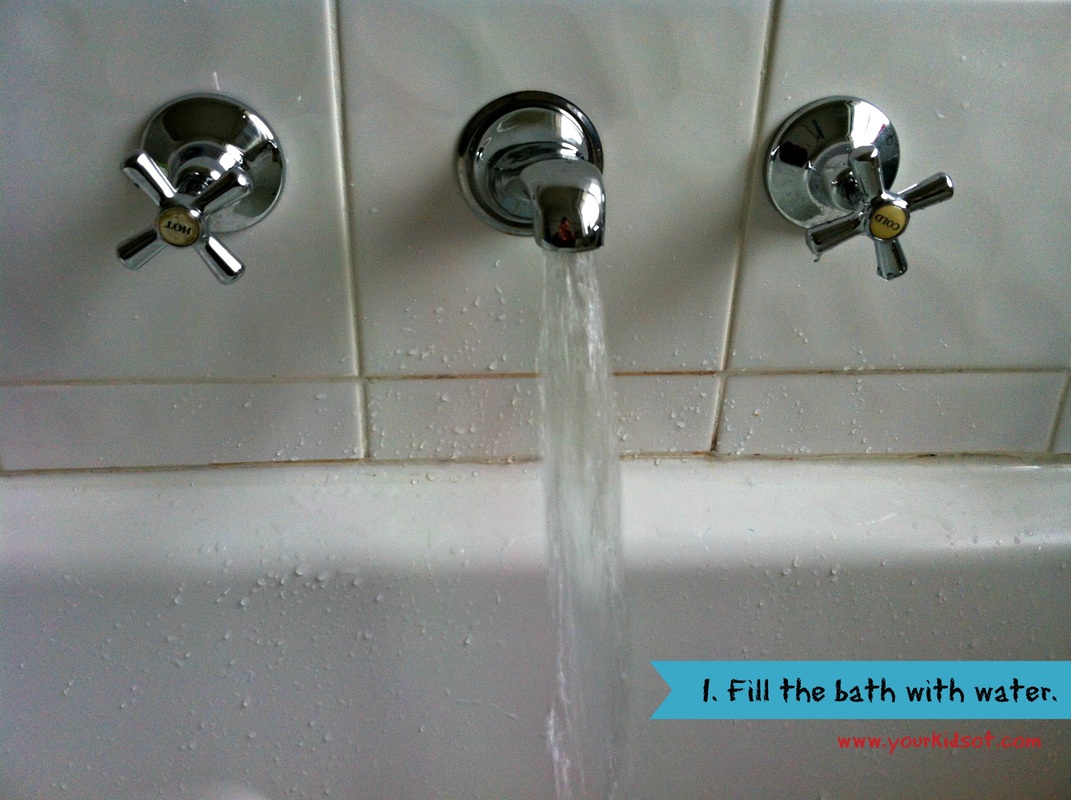
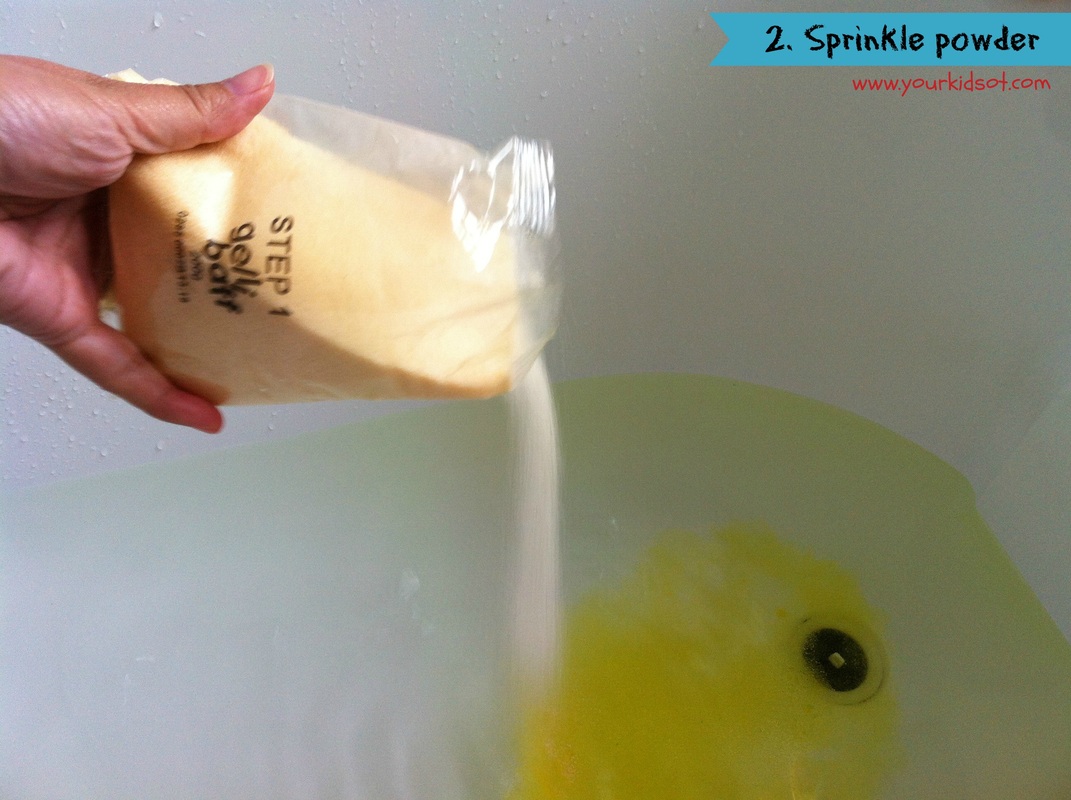
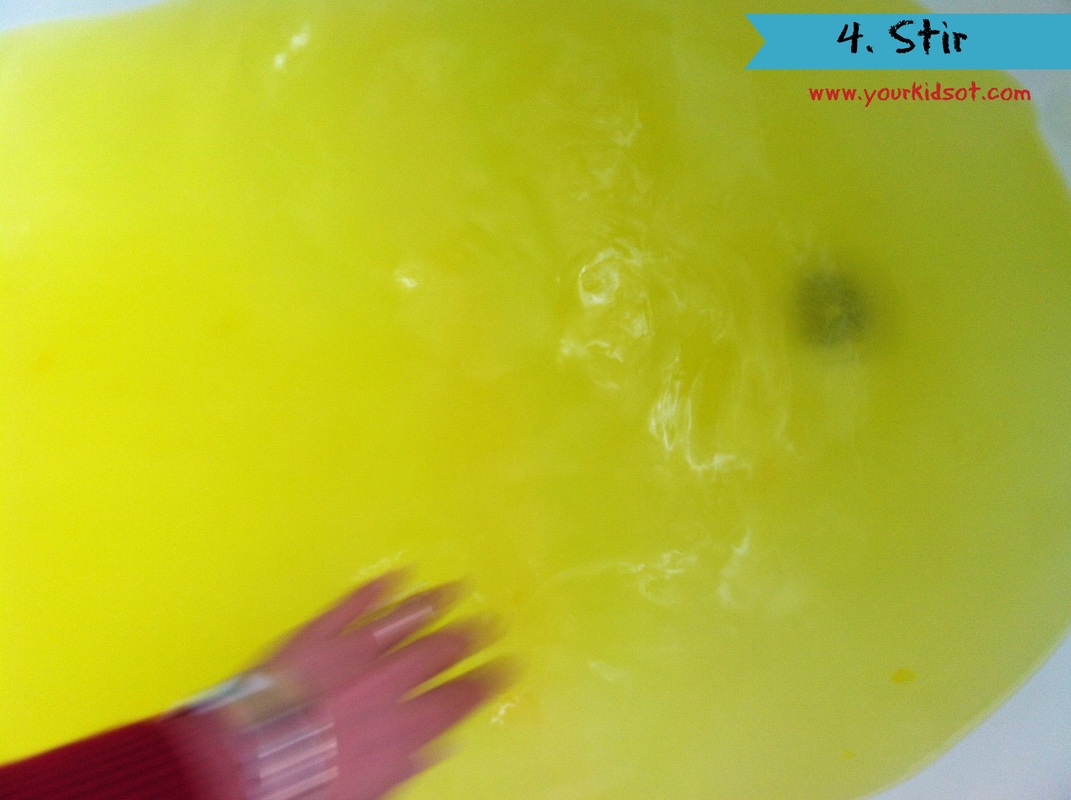
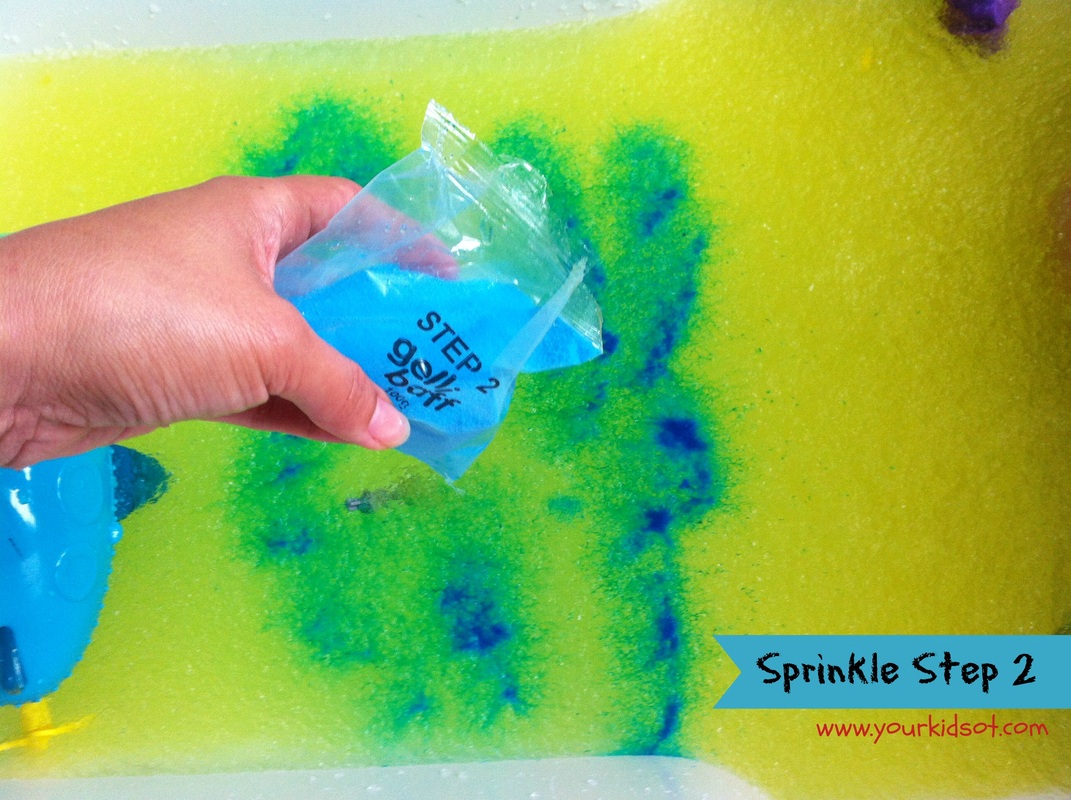
In the "Gelli Baff" box you get two packets of powder. It is a simple application. Here's what to do...
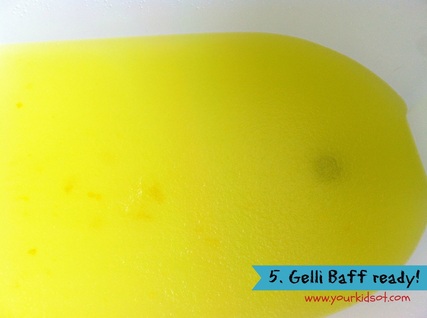
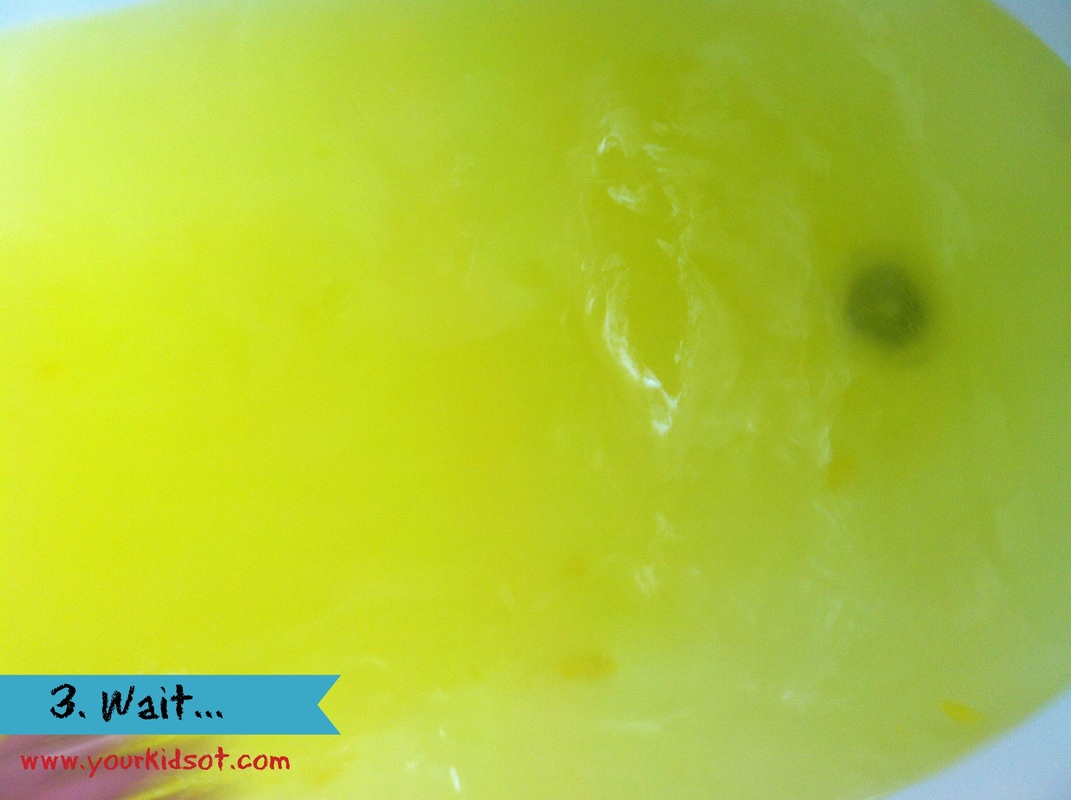
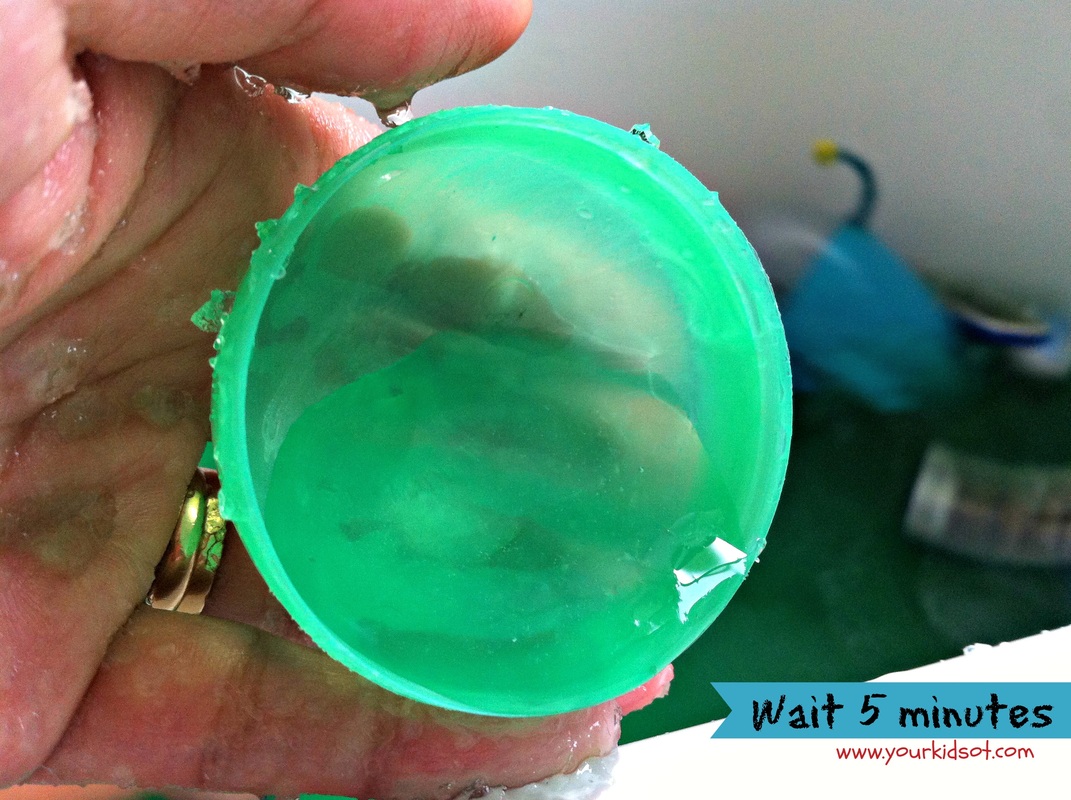
5. Ready to play (can you see the density changing in the photographs?)
Miss 7 and Mr 3 were really excited. Miss 7 leapt into the bath and immediately LOVED it. Mr 3 dipped a toe and said "yuck...urgh it's slimey" and then was taken to the shower. Here's the "Gelli Baff" in play... 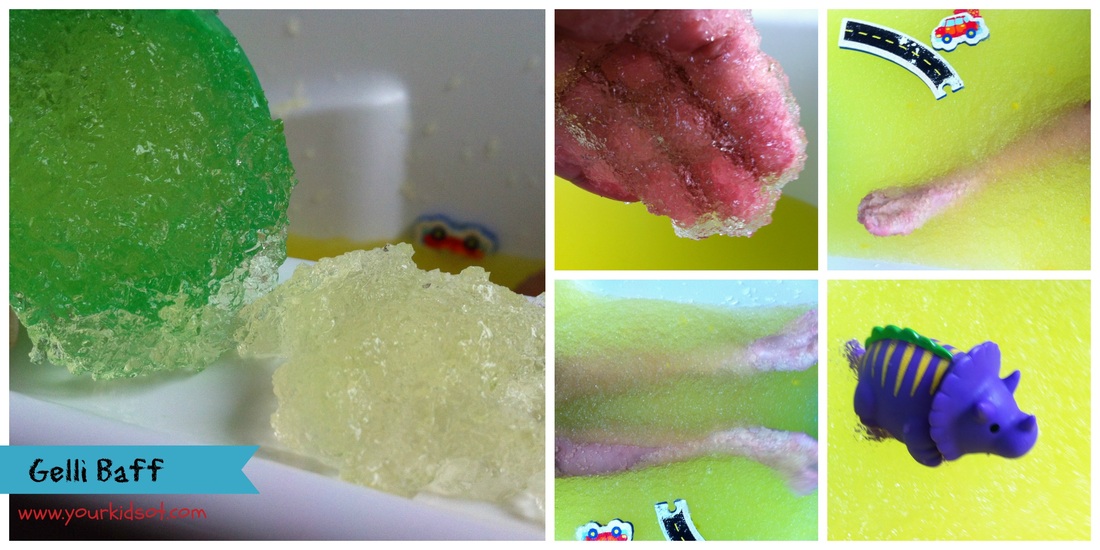
To really get an idea of the texture here is a short video. To turn the goo back into water...
This is a pretty cool product and I can see it used in a sensory play tray at home, childcare or preschool. It would also be great in an outdoor wading pool in summer. I forgot to mention the colour changes as you add the "step 2" powder so we went from yellow to green. There are other colour options too. This will also interest those who like science looking at density and colour. The colour does not stain the bath or your child. Miss 7 reports that it felt like a "hug" in the water. Mr 3 is a bit tactile defensive (reacts to touch sensations) and did not enjoy the experience. We found that a rinse off in clean water was necessary for both kids after playing with "Gelli Baff". Would your kids like Gelli Baff? Try it and see!
Note: I have not received any remuneration for this product review. All opinions are comments are my own. This post does contain affiliate links.
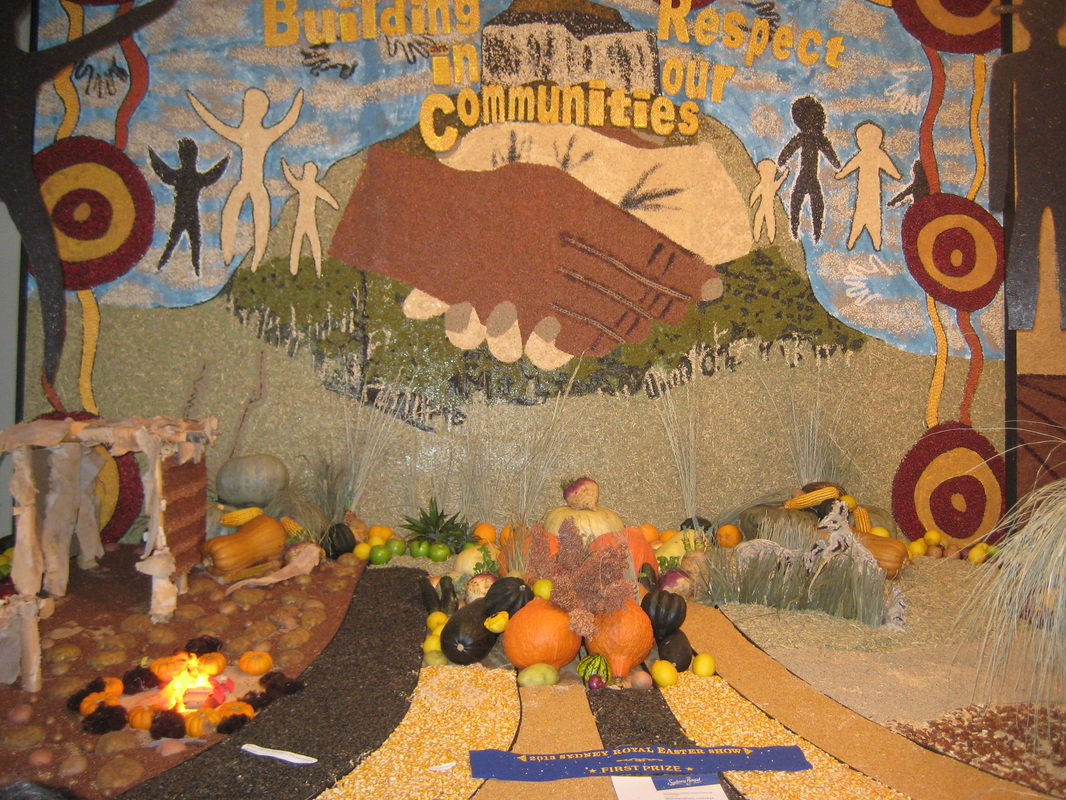
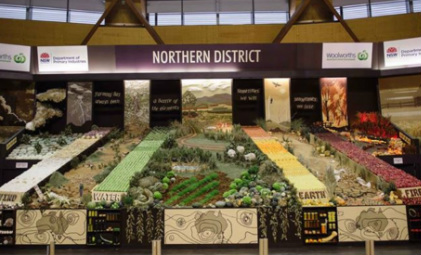
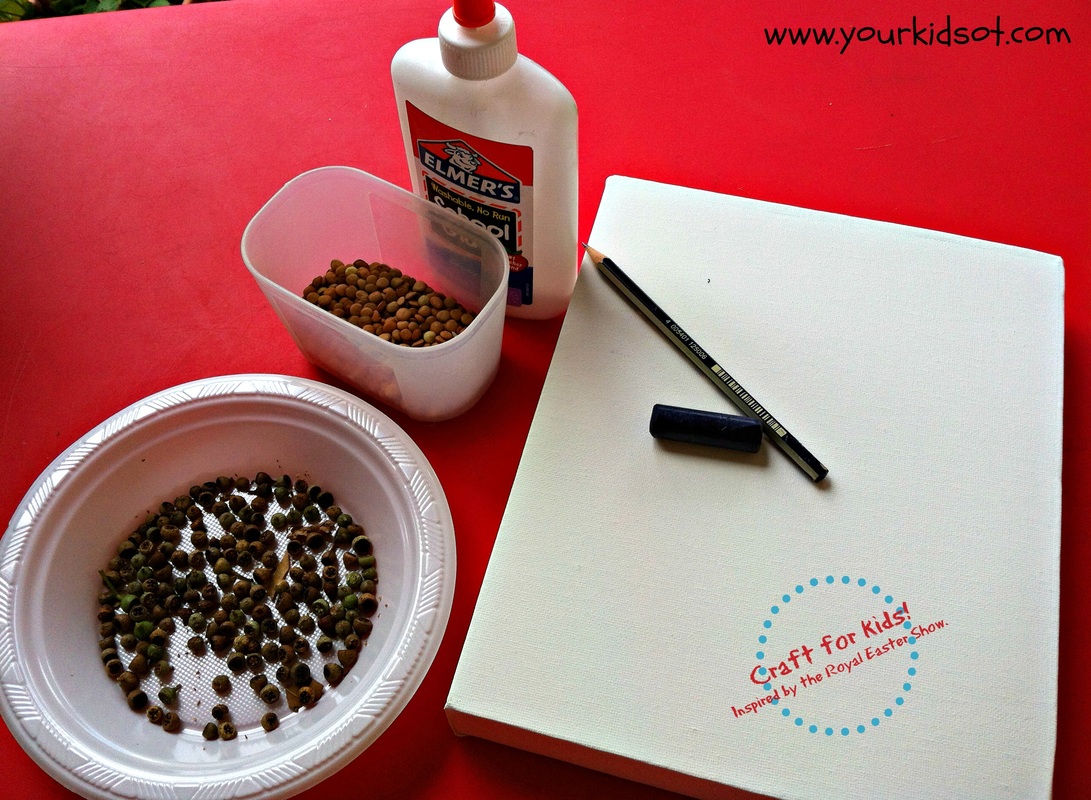
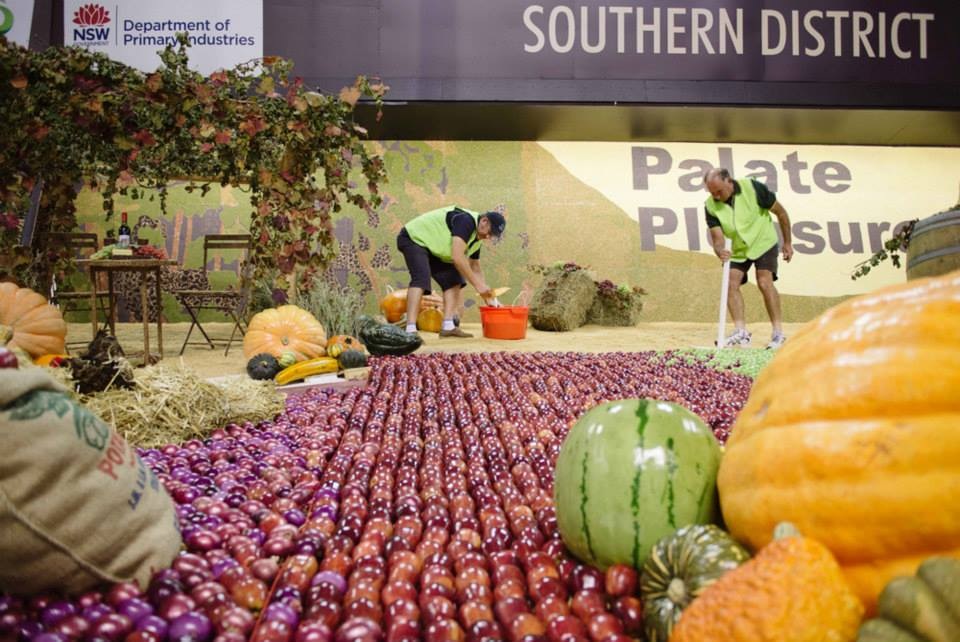
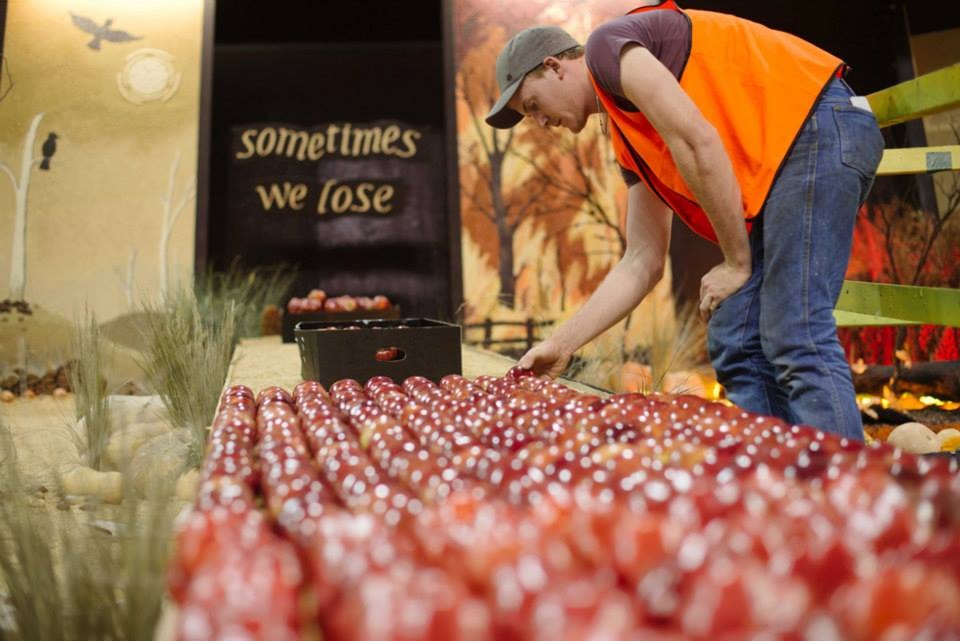
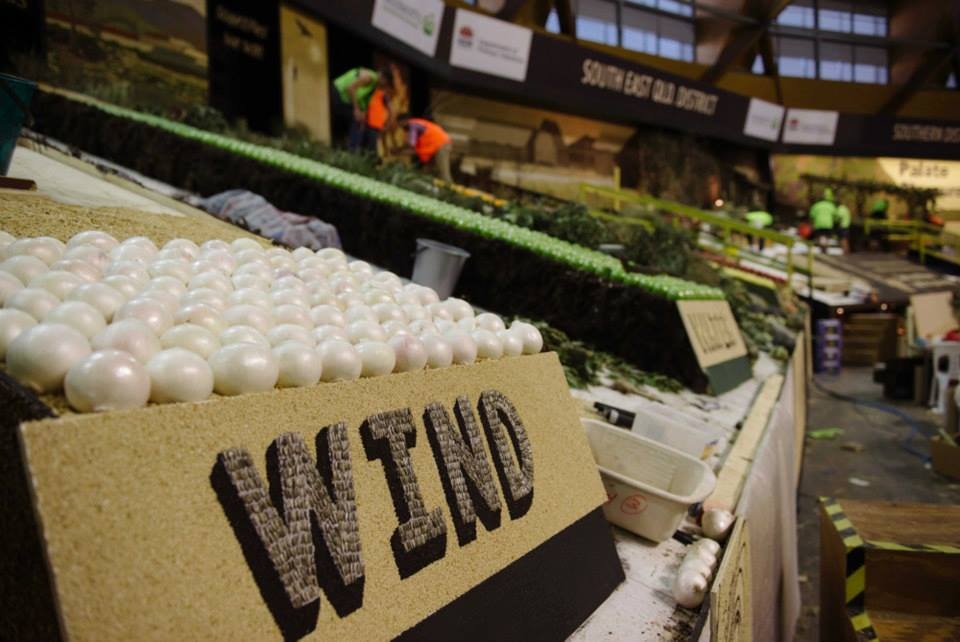
This craft is inspired by the district exhibits found at the Sydney Royal Easter Show. Instead of fruit and vegetables, we gathered some seed pods from the garden, lentils, rice and pasta.
What do you do?
Drying time is quite a while (several hours, depending on how much glue is used). 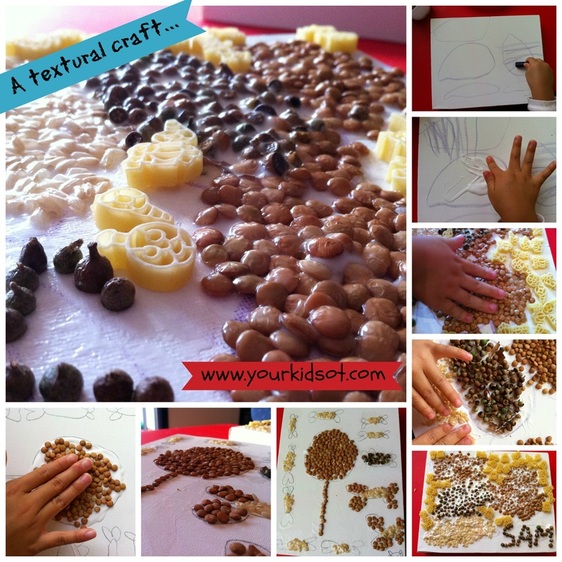
This is a "free form" craft and suits kids of all ages. As you can see from the photographs, Miss 7 drew a picture and was quite precise with her layout and placement of textural elements. Mr 3 was less precise, however still enjoyed placing the various textures onto the canvas {and yes he received help to spell out his name}.
Depending on your child's attention span, this is a craft that your child might start and then come back to at a later time or even on a different day. You could introduce a new element for them to paste when they return. The finished work might not be as stunning as a fruit and vegetable display from the Sydney Royal Easter Show, however, it provides a textural board for hands to explore. The textures are really interesting when the glue has dried. It also makes a unique artwork for your child's bedroom wall or as a gift. Ours are displayed above our fireplace (still not completed, mind you). This is the perfect craft to do over the school holidays, maybe after a visit to the show. Do you enjoy visiting the Sydney Royal Easter Show? What do you like best? If you live somewhere other than Sydney - do you have something similar to our district exhibits?
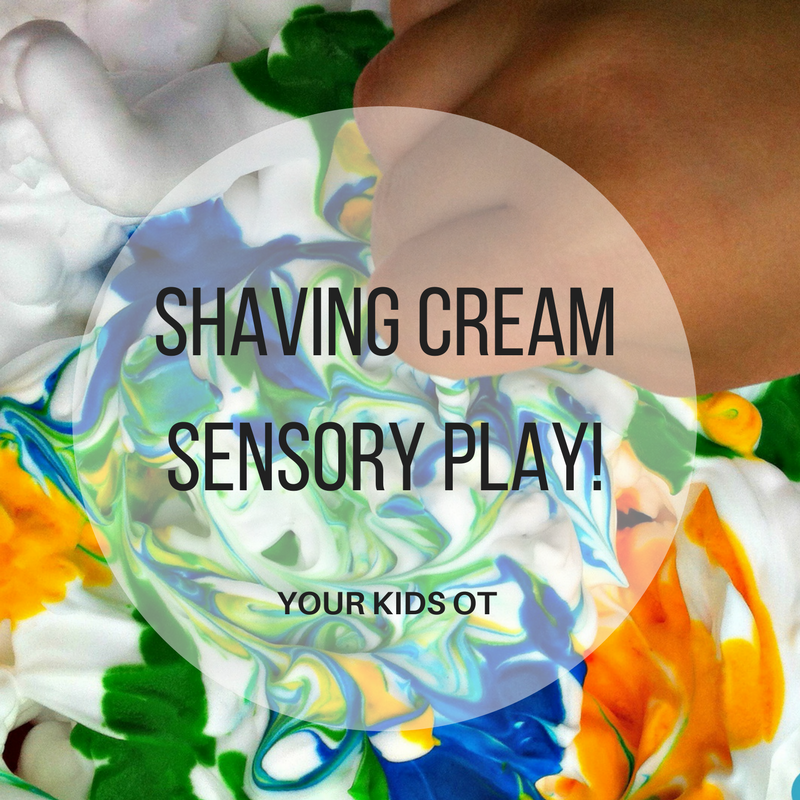
Ever had a pinterest inspired attempt at a craft and fail? Guess which is mine?
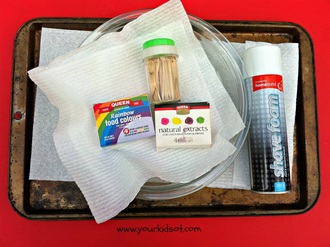
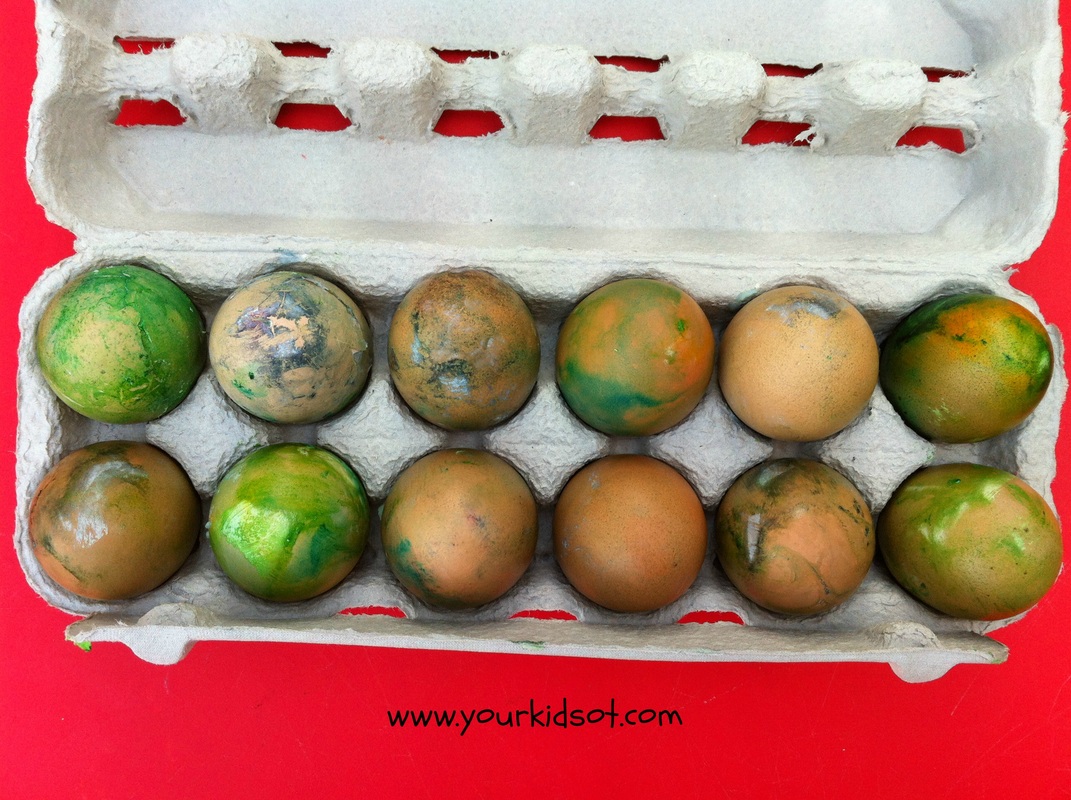
It looked so beautiful, it sounded so easy ... anyway moving right along, I'm an OT - flexible, creative, adaptable ... the post is now called "Homemade sensory experience with colour!" See it sounds better already.
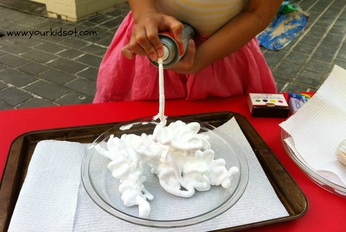
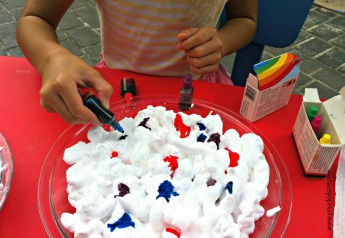
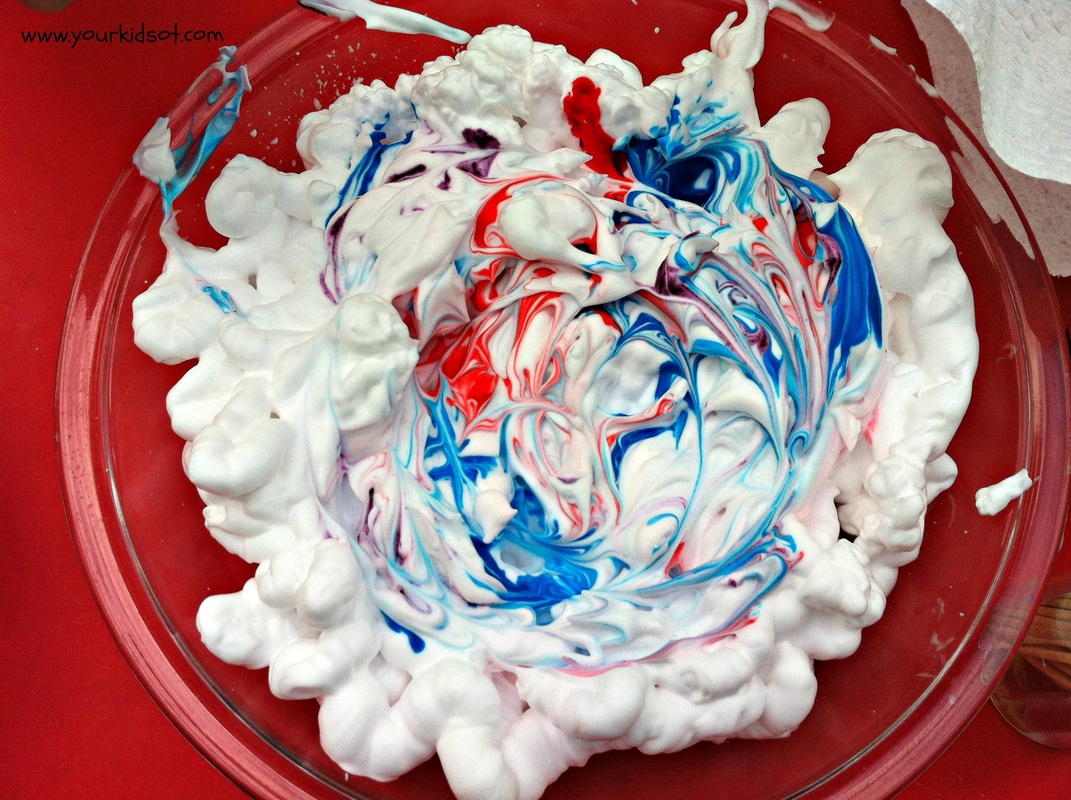
Here is what we did.
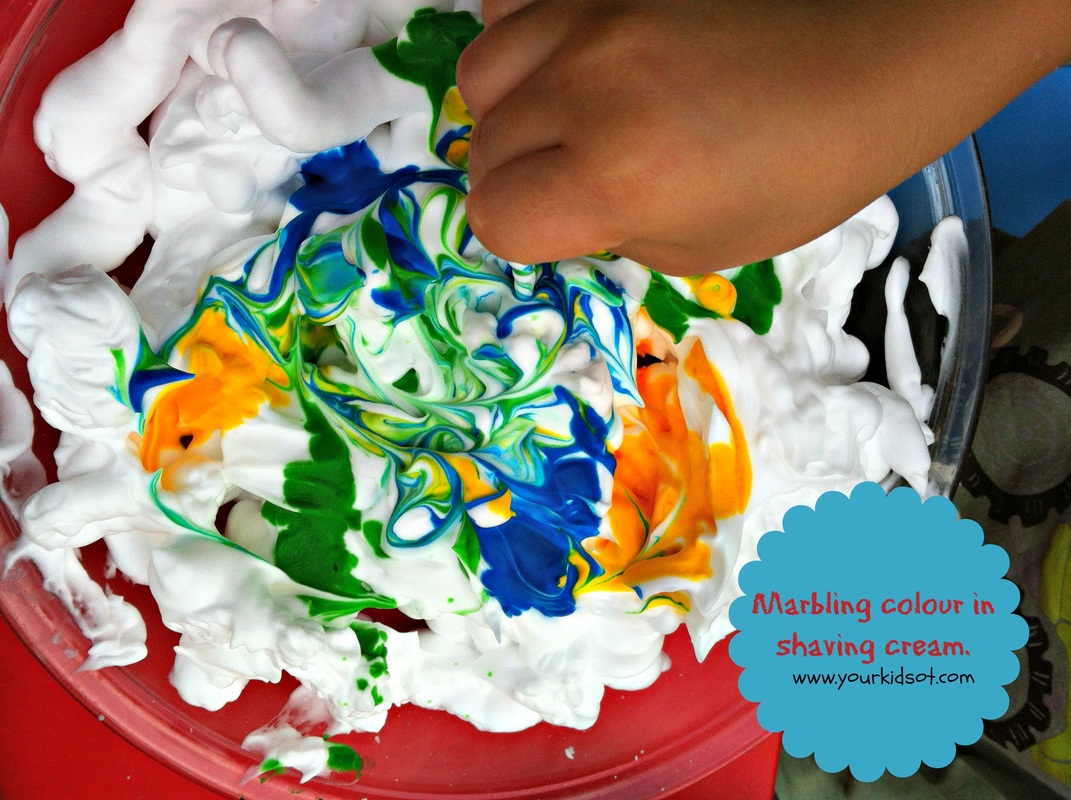
3. Use a toothpick to marble the food colouring into the shaving foam.
4. Roll the egg into the shaving foam mixture.
5. Place the shaving foam covered egg onto a tray with paper towel to dry for 30 minutes. Remove shaving foam with paper towel for final dyed eggs.
So our colour didn't really stick to the egg. There are probably a few good reasons - our eggs were still warm from being recently boiled and I think the original eggs were white and maybe blown out so they were lighter than the shaving foam...
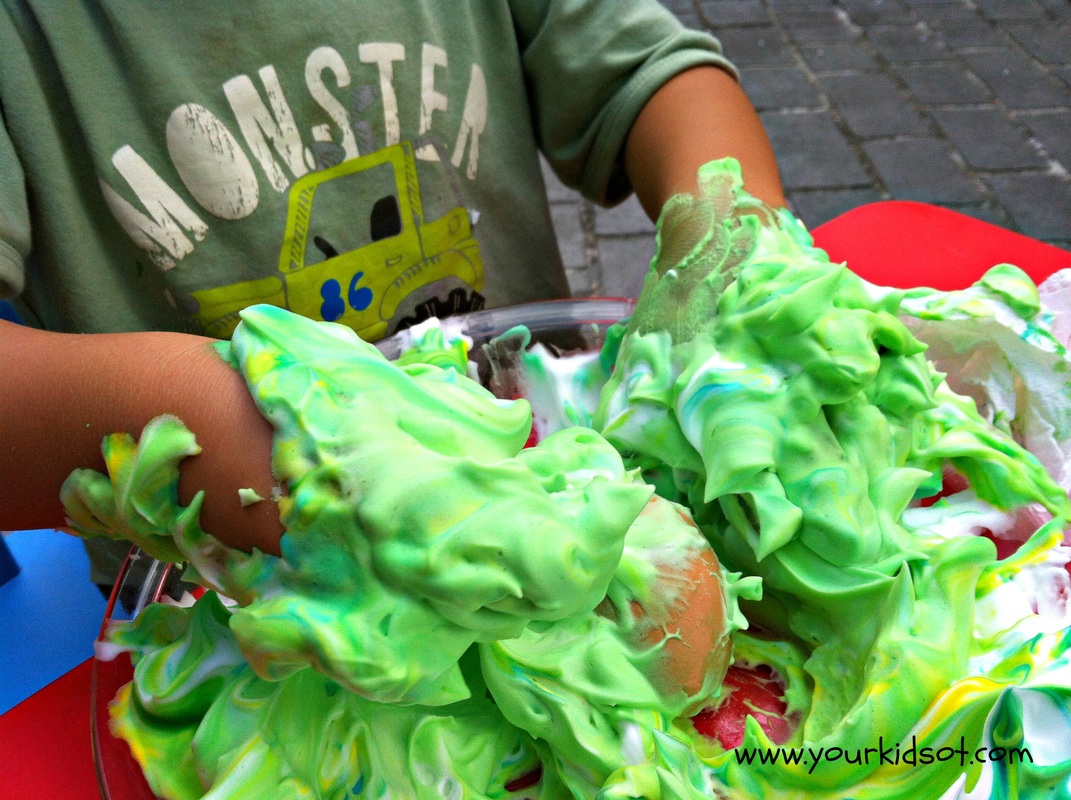
Well we certainly made a good coloured sensory mess and the kids loved it! They loved spraying the shaving cream, dropping the colour, mixing it with a toothpick and getting their hands into the mess. So as a homemade sensory experience with colour, it worked really well! Have you had a Pinterest inspired fail? Have you got a tried and tested way of dyeing your eggs? Do your kids enjoy messy play?
Note: Shaving foam should not be consumed. Children should be supervised during this activity and it is not recommended for children less than 3 years of age. I would not recommend consuming the egg after this activity.
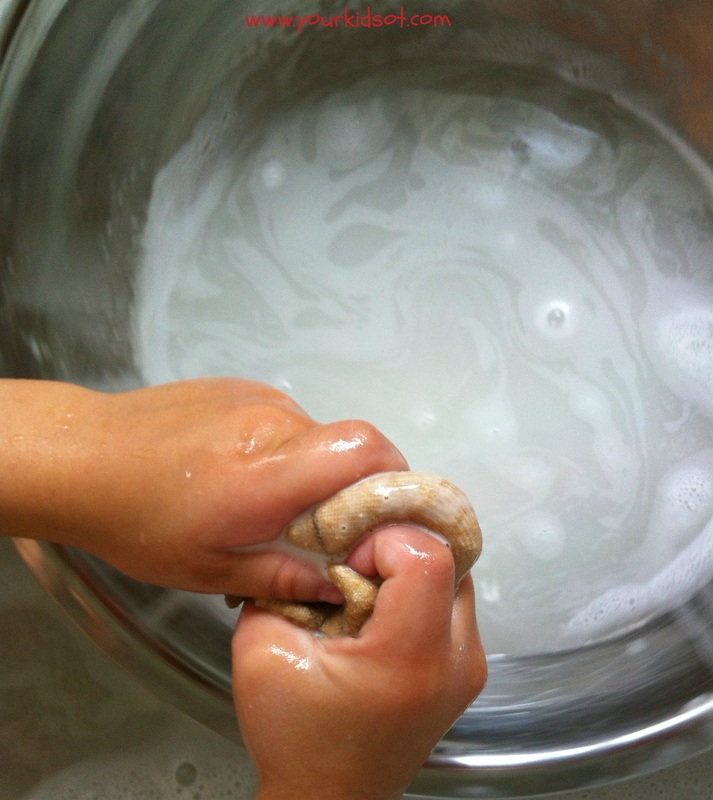
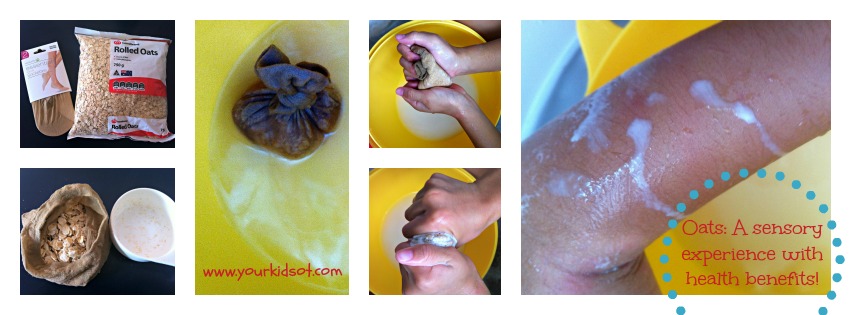 Oats can be found in many skincare products. They have been clinically shown to help heal dry and itchy skin. Miss 7 has eczema and an "oat-milk bath" was recommended to us by a friend when she was younger. This is what we do.... What do you need? Rolled oats (uncooked and not the instant stuff). Sockette Preparation Place 1/2 cup (or more) of the oats into the sockette. Tie a knot in the sockette. What do you do? Place the oat-filled sockette in some water allowing the oats to soak up the water. Squeeze the sockette. Repeat until you get a milky liquid from the oats. Miss 7 likes using oat-milk on her arms and legs. She rubs the sockette on her skin squeezing out the milk. You can generate quite a lot of oat milk from the 1/2 cup of oats. If you have more than one child in the bath with multiple sockettes, the bath gets quite milky. When finished, discard the oats and wash out the sockette for next time.
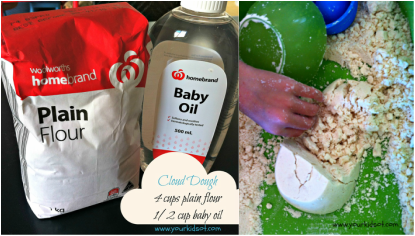
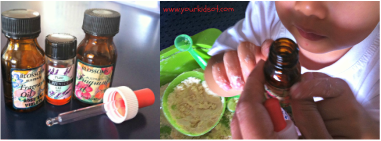
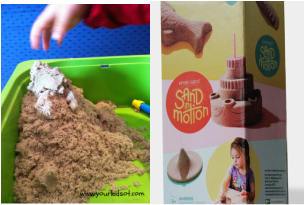
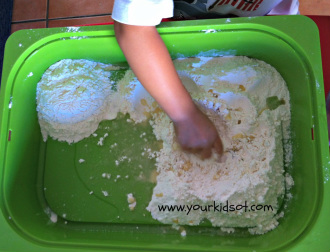
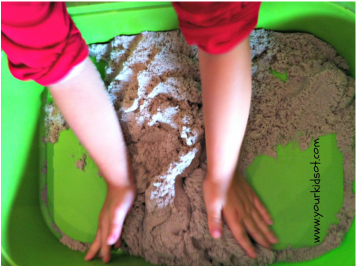
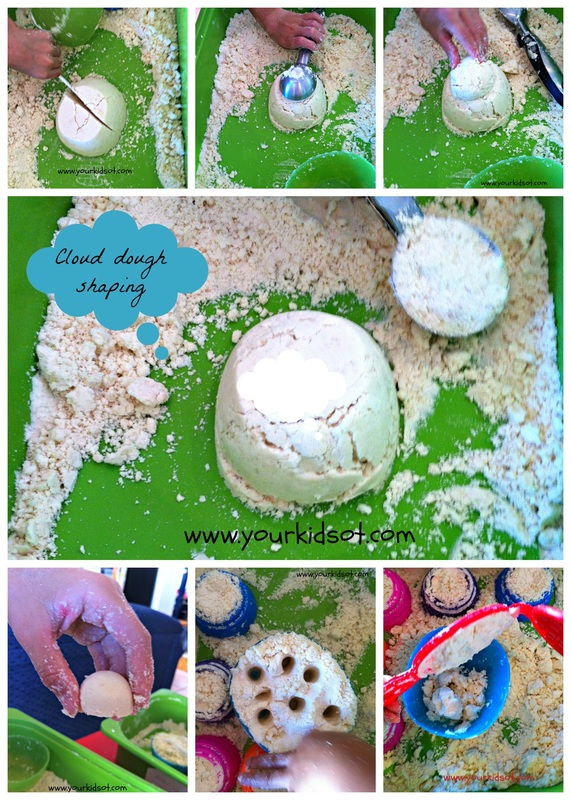
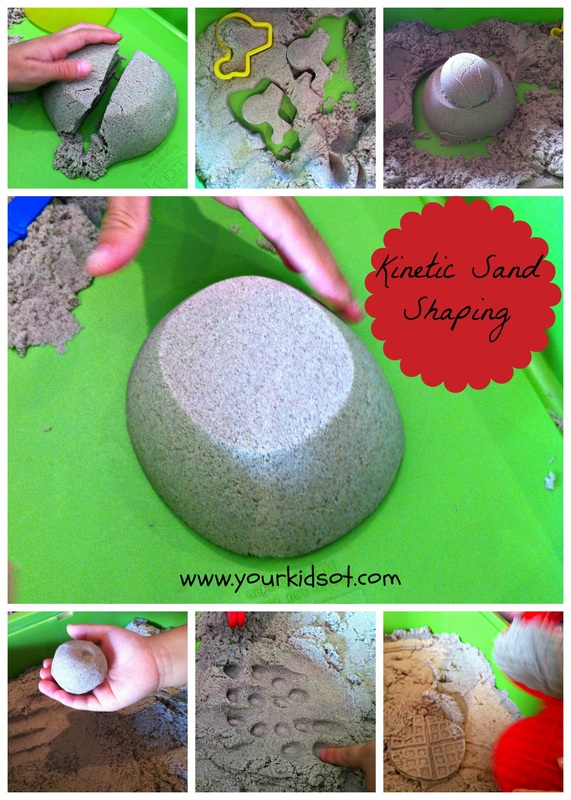
This is the first of many "Dough Wars!" to be found here at Your Kids OT. There are so many "doughs" on the market and many more recipes for various "doughs" on the internet. Today, I'm comparing "Cloud Dough" and "Kinetic Sand". Don't know what they are... read on...
Winner: Cloud dough is the cost effective option. I feel protective of the Kinetic sand each time I see some land on the floor and potentially be thrown away. {Feels a bit precious because of the cost, but that could just be me!}
Winner: Either .... A personal preference here. Both feel great to me!
Winner: Kinetic Sand is easier to mould and shape. Both have great properties though.
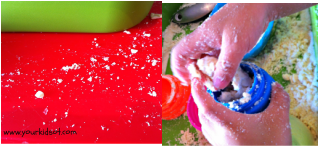
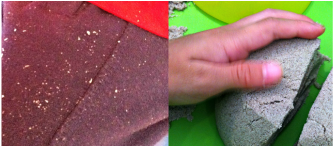
Winner: Kinetic Sand is less messy but not completely mess free. I will leave the overall winner up to you! Both sensory experiences are fantastic. They have unique properties that are better felt than described. Kinetic Sand would be a great present for a child and I can see "Cloud Dough" in preschools and childcare centres across the globe! Try them both and let me know what you think!
Note: Cloud dough should not be consumed. Please supervise children during this activity and it is not recommended for children less than 3 years of age.  Editorial Note after publication:
Looking for more ideas when playing with Kinetic Sand? Read about"7 invitations to play Kinetic Sand". |
AuthorHi, I'm Cindy and I am an Occupational Therapist. I enjoy working creatively with children to see them reach their potential. Read more about me here. 
SEARCH THIS SITE
Archives
May 2024
Categories
All
Popular Posts
 |






 RSS Feed
Join the YKOT e-newsletter!
Subscribe to get our latest content by email and receive
the SHAPE ROADS PRINTABLE NOW!

Success! Now check your email to confirm your subscription and receive your free printable!
Join our Mailing List!
Subscribe to get our latest content by email and receive
the SHAPE ROADS PRINTABLE NOW as a thankyou!
Success! Now check your email to confirm your subscription and receive your free printable!
Disclaimer: The information on this site is general in nature and should be used for educational and entertainment purposes. The activities are safe for most children, however, you should consult an Occupational Therapist or health professional to address specific movement, sensory or other medical conditions. This blog does not replace formal therapeutic professional advice given by a health professional or medical practitioner. Reviews and endorsements of products will only be made based on my expertise and personal opinion; and deemed worthy of such endorsement. The opinions shared in sponsored content will always be my own and not that of the advertising company or brand. Content, advertising space or posts will be clearly identified if paid, affiliated or sponsored. Affiliate links may be found throughout this website in advertising. This means that if you follow through with a purchase from these links, Your Kids OT will receive a percentage of the sale. Your Kids OT undertakes to meet the requirements of the "Social Media Policy" as published by Australian Health Practitioner Regulation Agency (AHPRA). Further information about this policy can be found here.
Find meFollow me |
|
About me
AuthorHi, I'm Cindy and I am an Occupational Therapist. I enjoy working creatively with children to see them reach their potential. Read more about me here. 
|
Copyright © 2017 Your Kid OT