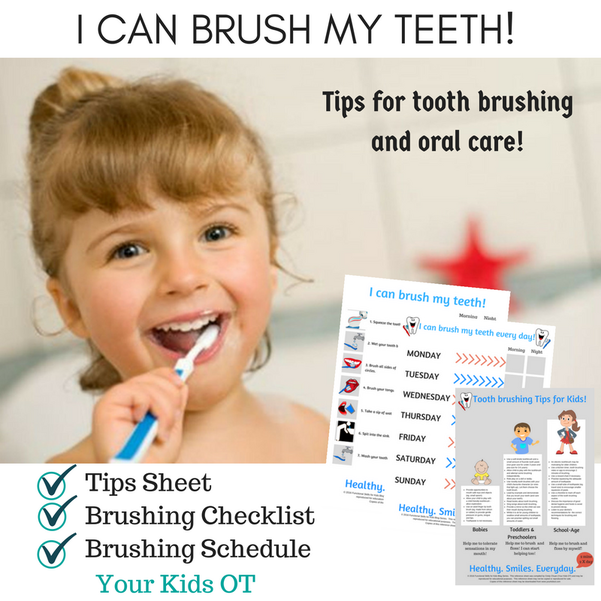
Tooth brushing is an important aspect of personal hygiene! This post is part of the "Functional Skills for Kids Blog Series" with a look at different forms of personal care. Make sure you check out all the great tips for hand washing, bathing, showering, nose blowing, hair cuts, sleep, screen-free quiet times as well as adolescent hygiene ..... at the end of this article!
~~~~~~~~~~~~~~~~~~~~~~~~~~~~~~~~~~~~~~~~~~~~~~~~~~~~~~~~~~~~~~~~~~~~~~~~~~~~~~~ Dentists worldwide including the America Dental Association and theAustralian Dental Association recommend that children brush their twice a day for two minutes at a time. They also recommend regular visits to the dentist, use of fluoride tooth paste and daily flossing. Both of these sites have great resources to encourage your kids to brush and floss! Occupational therapists help people to become independent in activities of daily living (ADL). We consider aspects of the activity as well as environmental demands to determine why a child might have difficulty achieving independence in a task. For babies and toddlers, we also consider why they may not want to participate in the task! Firstly we may consider the developmental expectations for tooth brushing and some tips to help with these stages.
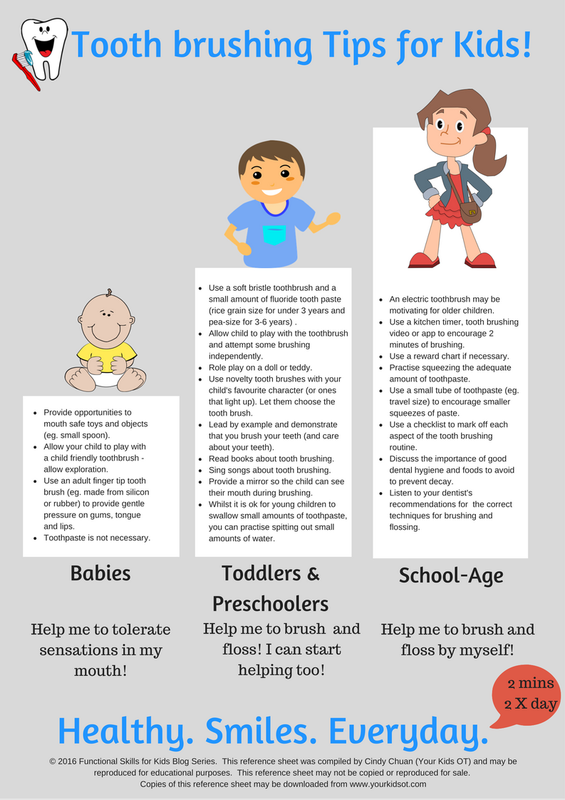
Babies
Aim: Tolerating oral sensation of something in the mouth and tongue movement. Tips for helping babies:
Toddlers/preschoolers Aim: Tooth brushing and flossing by an adult and beginning to brush parts themselves Tips for Toddlers and Preschoolers:
School Age Children Aim: Independent brushing and flossing teeth. Tips for School Age Children
Children with special needs may have difficulty with specific aspects of brushing their teeth. Here are some further considerations for tooth brushing!
Fine Motor Considerations
Tips to Help with Fine Motor Skills
Gross Motor Considerations
Tips to Help with Gross Motor Skills
Sensory Considerations Touch/Proprioception:
Smell
Vestibular
Auditory
Oral/Taste
Tips to Help With Sensory Processing Skills Your child may benefit from an oral desensitization program as part of a sensory diet. This might involve increasing deep pressure to the jaw, lips, cheeks, tongue and mouth. Bundy, Lane and Murray (2002) recommend providing infants and young children with deep pressure to the roof of the mouth or gums with the therapist's fingers or other soft rounded object (eg. Nuk toothbrush). They also suggest that older children and adults may be taught to provide deep pressure to their own mouths using a variety of oral motor toys (eg. using whistle, biting on knotted rubber tubing, blowing on a rubber strip). The Paediatric Occupational Therapy Department from Abertawe Bro Morgannwg University Health Board (2014) describe a protocol of oral desensitisation. This includes the following progressive steps:
You may also like to try...
Attention and Behavior Considerations
Tips to Help with Attention and Behaviour skills
Additional Considerations
Tips to Help with these additional considerations
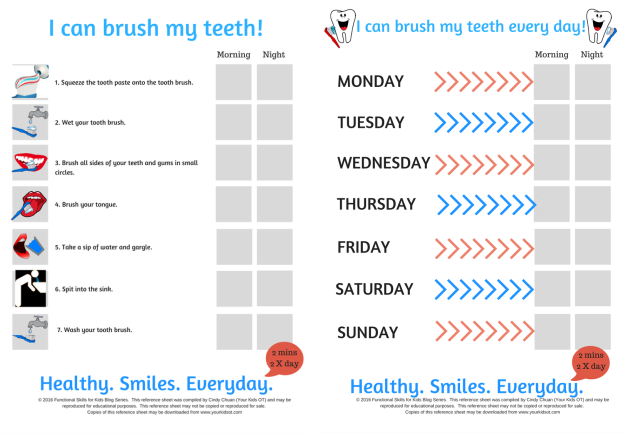
Do your kids like brushing their teeth? Have you downloaded your FREE tips sheet, checklist and reward chart? 
Task Analysis - Independent Bathing in Children | Your Therapy Source
Tips and Tricks for Teaching Hand Washing with Kids | Growing Hands-On Kids I can brush my teeth! Tips for Tooth Brushing and Oral Care! | Your Kids OT Screen Free Quiet Time When Daytime Naps are History | Kids Play Space Tips to Help Kids Learn How to Blow Their Nose | Sugar Aunts Tips to Help Kids Who Hate Haircuts | Mama OT Sensory Friendly Tips for Kids Who Have Trouble Sleeping | The Inspired Treehouse Your Child With Special Needs: How to Conquer Showering Independently | Miss Jaime OT Adolescent Hygiene Challenges | Therapy Fun Zone
Disclosure: The information on this site is general in nature. The activities are safe for most children, however,
you should consult an Occupational Therapist or health professional to address specific movement, sensory or other medical conditions. This article does not contain any affiliate links.
References:
Comments are closed.
|
AuthorHi, I'm Cindy and I am an Occupational Therapist. I enjoy working creatively with children to see them reach their potential. Read more about me here. 
SEARCH THIS SITE
Archives
June 2024
Categories
All
Popular Posts
 |

 RSS Feed
)
)
)
Join the YKOT e-newsletter!
Subscribe to get our latest content by email and receive
the SHAPE ROADS PRINTABLE NOW!

Success! Now check your email to confirm your subscription and receive your free printable!
Join our Mailing List!
Subscribe to get our latest content by email and receive
the SHAPE ROADS PRINTABLE NOW as a thankyou!
Success! Now check your email to confirm your subscription and receive your free printable!
Disclaimer: The information on this site is general in nature and should be used for educational and entertainment purposes. The activities are safe for most children, however, you should consult an Occupational Therapist or health professional to address specific movement, sensory or other medical conditions. This blog does not replace formal therapeutic professional advice given by a health professional or medical practitioner. Reviews and endorsements of products will only be made based on my expertise and personal opinion; and deemed worthy of such endorsement. The opinions shared in sponsored content will always be my own and not that of the advertising company or brand. Content, advertising space or posts will be clearly identified if paid, affiliated or sponsored. Affiliate links may be found throughout this website in advertising. This means that if you follow through with a purchase from these links, Your Kids OT will receive a percentage of the sale. Your Kids OT undertakes to meet the requirements of the "Social Media Policy" as published by Australian Health Practitioner Regulation Agency (AHPRA). Further information about this policy can be found here.
Find meFollow me |
|
About me
AuthorHi, I'm Cindy and I am an Occupational Therapist. I enjoy working creatively with children to see them reach their potential. Read more about me here. 
|
Copyright © 2017 Your Kid OT