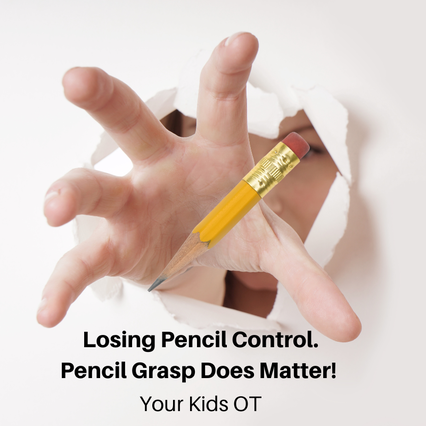
 Does pencil grasp matter? ! Well the short answer is yes. Yes it does matter. Occupational therapists have a role in identifying when it is important to address it! There has been a lot of talk recently, actually probably since 2012 when Schwellenus et al published their article in the Australian Occupational Therapy Journal (reference below). Their article report the four pencil grasps found to not affect legibility amongst their small sample. Changing pencil grasp has been seen as unnecessary and unneeded as long as function is obtained. If you are a long time follower, you will have read some my previous articles on grasp. I do agree that function is the aim of the game when it comes to writing. Pencil grasp is just one aspect that we consider. If you are new to Your Kids OT, you may want to head over to read here with reference to the above article for "Dynamic Pencil Grasp Why Do We teach it?". I discuss the Schwellenus article here as well as the question about when grasp has not yet been established. I also address "What if my child can't use a normal grasp? Should I change it?" taking into consideration when fatigue, pain, endurance and legibility are affected. Occupational therapists use their clinical reasoning all the time to work out what needs to change, what can remain the same, what skills can be taught or how to do we compensate? When we look at pencil grasp, there are lots of things to consider but one of the main things is actually "pencil control". Where is control of the pencil coming from? The shoulder? The elbow? The wrist? The fingers? What if the child looks like they are using one of the four pencil grasps that are seen as "efficient" but really they don't actually have a hold of the pencil? Pencil slips rather than a good pencil grip?! As a clinician and a blogger (and not a researcher), I can only share what I see in my own practice, my own experiences and how I make clinical decisions. I'm seeing an increasing number of children (of all ages) who allow the pencil to slip whilst they are using it. Their fingers touch the pencil but do they actually have a "grasp" or "hold" of it. Are they controlling the pencil or is the pencil controlling their movements? The pencil might slide so that the webspace of the hand closes up. The fingers might slide so that they end up very close to the nib of the pencil (or up too far away from the nib). The pencil may even slide so that it ends up pointing backwards rather than forwards. If we look closely are fingers touching fingers rather than the pencil? The affect of this, is loss of pencil control. Loss of pencil control can then lead to wobbly lines for some, poor legibility, fatigue or less writing than others of the same age. So what do we do about it? In these situations, a silicon pencil grip is very helpful! They allow the fingers to be positioned on the pencil for maximum support. Silicon pencil grips can relieve a child with fine motor skill difficulties to concentrate on the marks being made on the page (ie. drawing and writing). Many of the children (but not all) we see also struggle with the motor planning and thinking skills to make visual motor connections on the page. You can head over to this article "From Scribble to Drawing and Writing" if this is also a concern. At the same time, we continue to work on fine motor skills and hand strength (with lots of the activities that OTs are fabulous at incorporating into sessions). You can find browse a few ideas from the YKOT Fine Motor Page or Instagram Page. I've recently shared a few ideas to bring physical awareness to the important fingers needed or grasping in a video. My OT children have loved "pencil wars"! The "Losing Pencil Control Video" is also available on You tube HERE. Did you find this article helpful? Let me know if you have noticed an increase in "pencil slips" !   Cindy is a registered occupational therapist practising in Sydney, Australia. She has two growing children who are a constant source of inspiration and learning. Cindy loves working creatively to help children to reach their potential, finding opportunities in everyday living and making learning fun. She is also addicted to making printables (even when they take a long time to complete). Cindy is the author of the Occupational Therapy blog Your Kids OT. Read more articles from Your Kids OT at https://www.yourkidsot.com/blog
Cindy is a contributing author of the Functional Skills for Kids Therapy Team. They have together published THE HANDWRITING BOOK, THE SCISSORS SKILLS BOOK and THE TOILETING BOOK. The information on this site is general in nature. The activities are safe for most children, however, you should consult an Occupational Therapist or health professional to address specific movement, sensory or other medical conditions. Affiliate links are used throughout this website to promote recommended products. Your Kids OT receives a small commission if any purchases are made through these links. Please see my disclosure policy for more details. Amazon Store: https://www.amazon.com/shop/yourkidsot YKOT shop: https://www.yourkidsot.com/store/c1/Featured_Products.html Teachers Pay Teachers: https://www.teacherspayteachers.com/Store/Your-Kids-Ot You Tube Channel: https://www.youtube.com/channel/UCZUz_5nYEOCkj32DiOCQo4Q/featured Facebook: https://www.facebook.com/yourkidsot Instagram: https://www.instagram.com/yourkidsot/ Pinterest: https://www.pinterest.com.au/yourkidsot/ Reference: Schwellnus, H., Carnahan, H., Kushki, A., Polatajko, H., Missiuna, C., & Chau, T. (2012). Effect of pencil grasp on the speed and legibility of handwriting after a 10-minute copy task in Grade 4 children. Australian Occupational Therapy Journal, 59(3), 180-187. http://dx.doi.org/10.1111/j.1440-1630.2012.01014.x
0 Comments
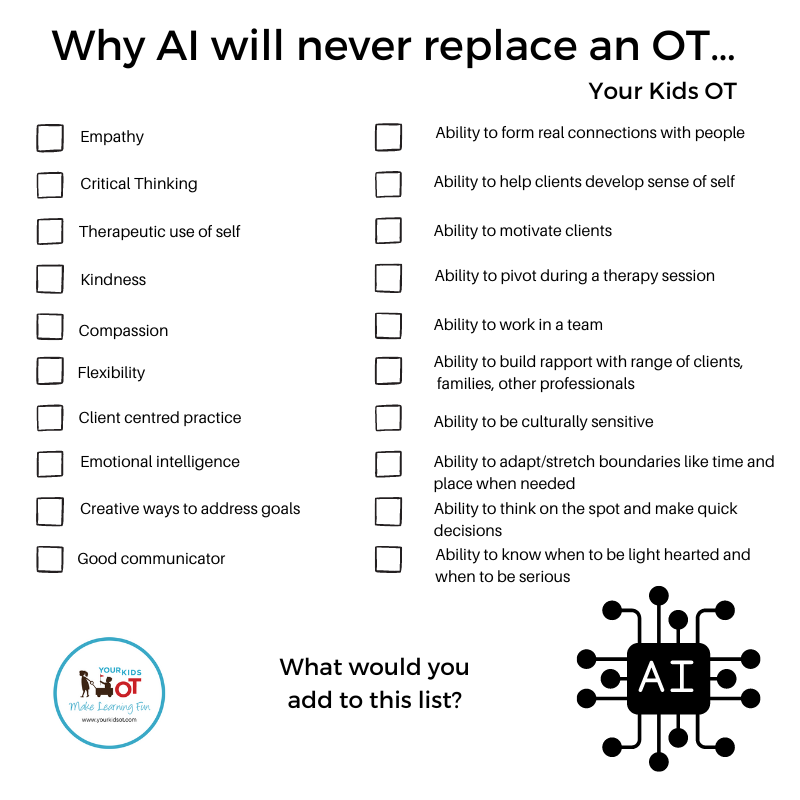 To be honest... it scares me. The world is changing and artificial intelligence is here to stay. There has been so much talk about AI recently; taking over our society, doing our jobs, creating everything from recipes to songs…. I’ve been reflecting on the impact for OT. I have heard of AI being used by OTs with grammar checks, program development and report writing. As I said, it scares me. OT is a fundamentally “human” profession that is built on relationship and connection. It is a two way process of engagement, function and collaboration. There would be so much missed if Ai is substituted into our process. So here is my list of why AI will never replace OT… * Empathy * Critical Thinking * Therapeutic Use of Self * Kindness * Compassion * Flexibility * Client Centred * Emotional Intelligence * Creative ways to address goals * Good communicator * Ability to form real connections * Ability to help clients develop sense of self * Ability to motivate * Ability to pivot during therapy session * Ability to work in a team * Ability to build rapport * Ability to be culturally sensitive * Ability to adapt/stretch boundaries like time and place * Ability to think on the spot and make quick decisions * Ability to know when to be light-hearted and went to be serious From discussing this with others... I would also add lived experience, expert opinion, human warmth and the ability to build trust. What would you add to this list?   Cindy is a registered occupational therapist practising in Sydney, Australia. She has two growing children who are a constant source of inspiration and learning. Cindy loves working creatively to help children to reach their potential, finding opportunities in everyday living and making learning fun. She is also addicted to making printables (even when they take a long time to complete). Cindy is the author of the Occupational Therapy blog Your Kids OT. Read more articles from Your Kids OT at https://www.yourkidsot.com/blog
Cindy is a contributing author of the Functional Skills for Kids Therapy Team. They have together published THE HANDWRITING BOOK, THE SCISSORS SKILLS BOOK and THE TOILETING BOOK. The information on this site is general in nature. The activities are safe for most children, however, you should consult an Occupational Therapist or health professional to address specific movement, sensory or other medical conditions. Affiliate links are used throughout this website to promote recommended products. Your Kids OT receives a small commission if any purchases are made through these links. Please see my disclosure policy for more details. Amazon Store: https://www.amazon.com/shop/yourkidsot YKOT shop: https://www.yourkidsot.com/store/c1/Featured_Products.html Teachers Pay Teachers: https://www.teacherspayteachers.com/Store/Your-Kids-Ot You Tube Channel: https://www.youtube.com/channel/UCZUz_5nYEOCkj32DiOCQo4Q/featured Facebook: https://www.facebook.com/yourkidsot Instagram: https://www.instagram.com/yourkidsot/ Pinterest: https://www.pinterest.com.au/yourkidsot/ 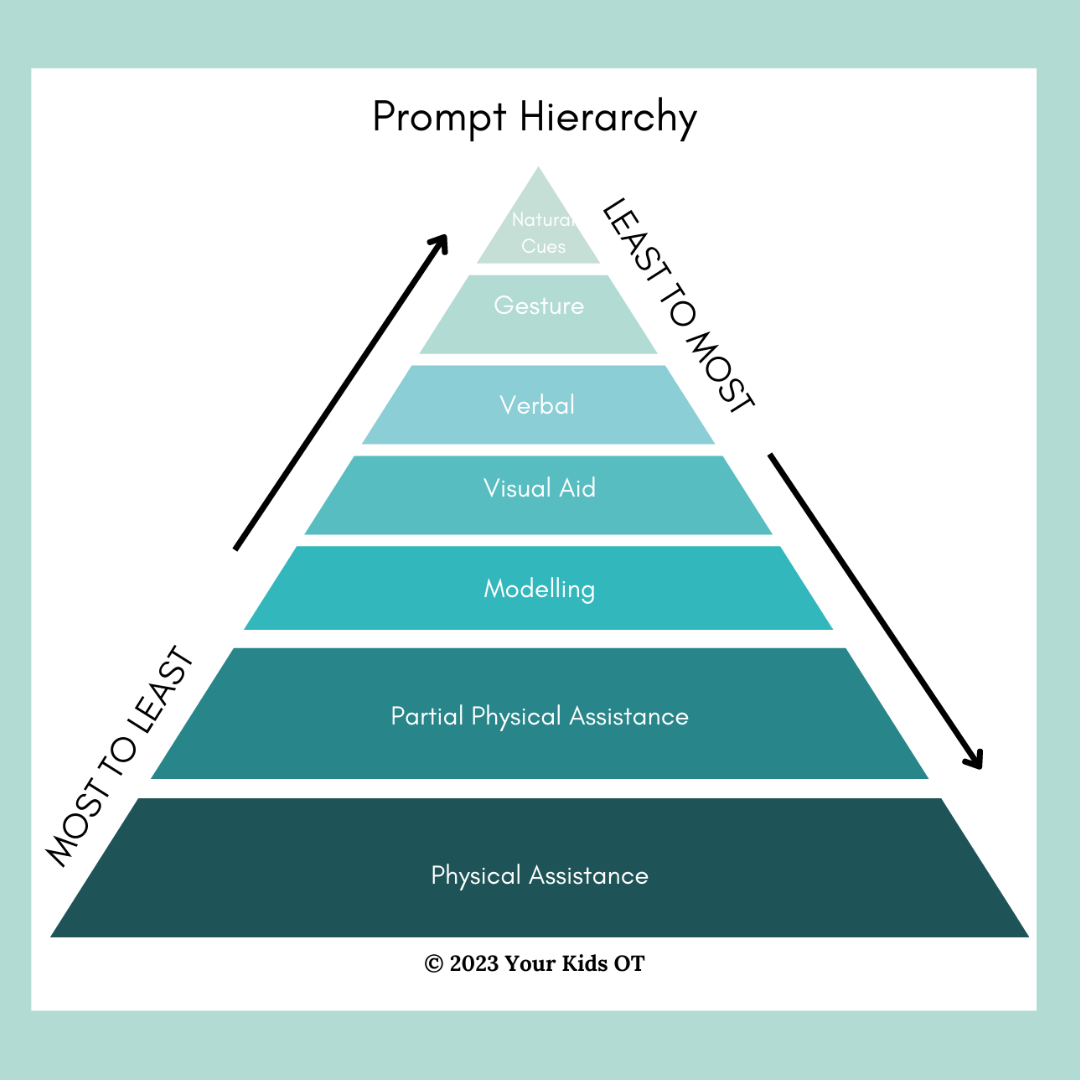 Have you ever thought about how much help you are providing your child? Do you feel like you are always repeating yourself? Does your child have difficulty learning new skills? The prompt hierarchy is something that OTs (and other therapists) use to consider the level of support a child needs. Sometimes we prompt from most to least. At other times we will prompt from least to most. More on that later in the article. Prompts and cues are provided for additional support during learning of tasks to develop and acquire skills. Prompts and cues can assist with preventing mistakes, improving performance, reducing frustation, maximising learning potential, motor planning, reinforcing sequencing of steps and aiding memory. Prompts can assist with kinesthetic learning through movement and muscle memory for long term independence. A combination of prompts can provide a multi-sensory approach where movement, visual and verbal cues are provided simultaneously. So what types of prompts are there? PHYSICAL ASSISTANCE - The adult provides physical help by holding the child and guiding movement. Example 1: The adult's provides "hand over hand" assistance by holding the child's hand to move a pencil to form a letter. Example 2: The adult holds the child's waist and lifts them up to facilitate jumping. Example 3: The adult holds down the child's forearm on the table during a writing activity. PARTIAL ASSISTANCE - The adult provides partial physical assistance by using their body (usually hands) to direct movement. Example 1: The adult uses their finger on the page to provide a physical barrier to direct the size of letters formed. Example 2: The adult positions hand for child to place foot on top (of adult's hand) to encourage balance on one leg. Example 3: The adult taps the child's wrist as a reminder to place it on the table. 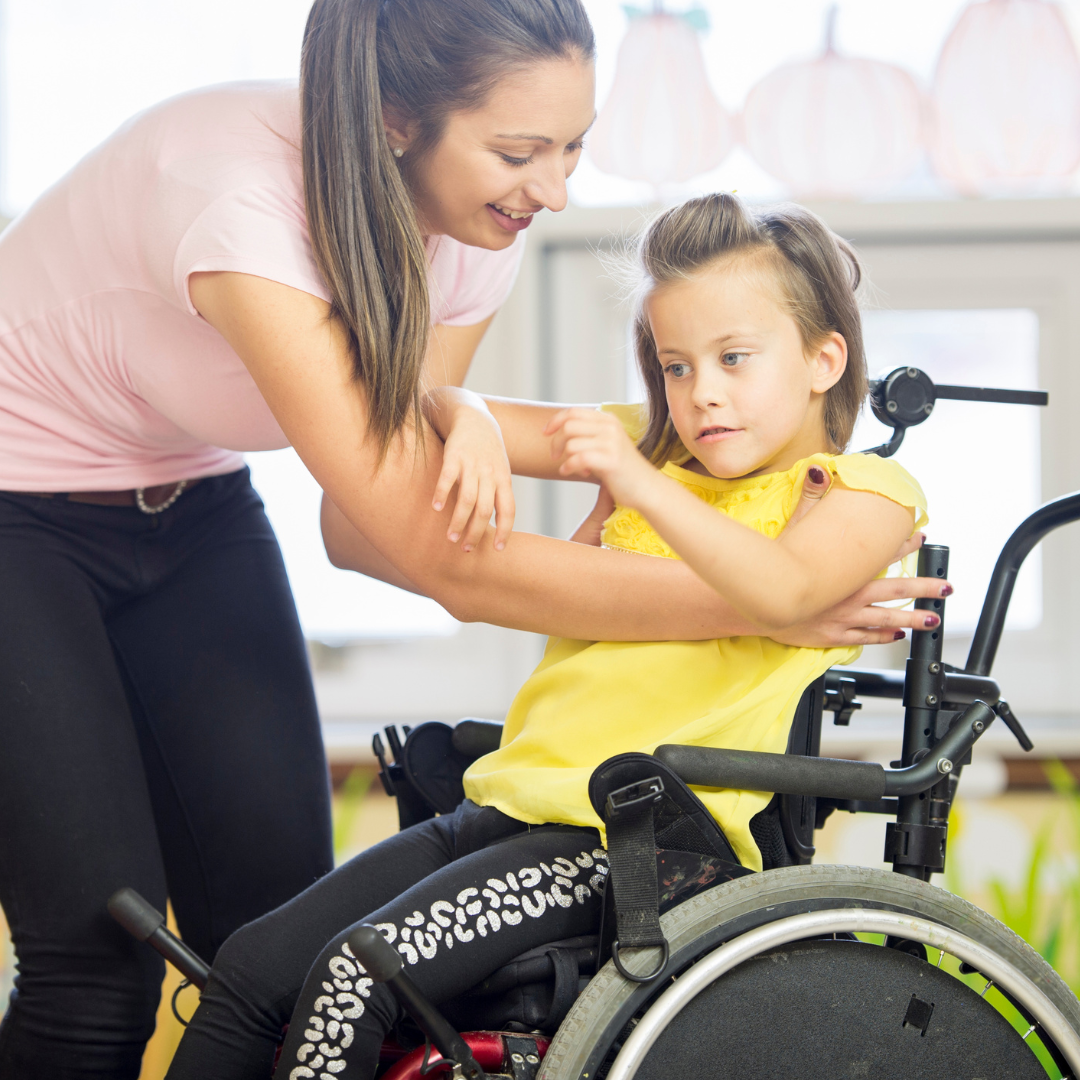 MODELLING - The adult demonstrates an action to complete a task (or part of a task). The child imitates the adult's action. Example 1: The adult draws the letter "a" and the child then draws the letter "a". Example 2: The adult demonstrates jumping over a beam and the child jumps over the beam. Example 3: The adult places wrist and forearm on table whilst writing. The child places wrist and forearm on table during writing. VISUAL AID - Pictures, photograhs, checklists, symbols, social stories, signs and written instructions can provide visual prompting to assist a child with learning and achieving independence. EXAMPLE 1: A printed alphabet visual aid is provided on a student's desk for the child to reference when writing. EXAMPLE 2: An obstacle course contains pictures along the way to provide a visual prompt for what to do at each station. EXAMPLE 3: A social story provides a suggested way to learn a toileting routine. VERBAL - Verbal instructions are provided to the child before or during a task. This may be directive or questioning. EXAMPLE 1: "What hand do you use to hold the pencil?" EXAMPLE 2: "Jump with your feet slightly apart." EXAMPLE 3: "Draw a straight line down, up and around."  GESTURE - A small movement to signal an action. These gestures may need to be explained if the child is unable to intrepret the meaning independently. EXAMPLE 1: Hand held up represents "stop". EXAMPLE 2: Finger held to closed lips represents "no talking". EXAMPLE 3: Both palms raised upwards represents "stand up". NATURAL CUES - Natural cues occur without additional information from an adult. EXAMPLE 1: The children sitting on the floor facing the teacher indicates that it is time to sit on the floor and look at the teacher. EXAMPLE 2: The bell ringing for at the end of recess indicates time to line up. EXAMPLE 3: Tightness in the bladder indicates the need to go to the toilet. 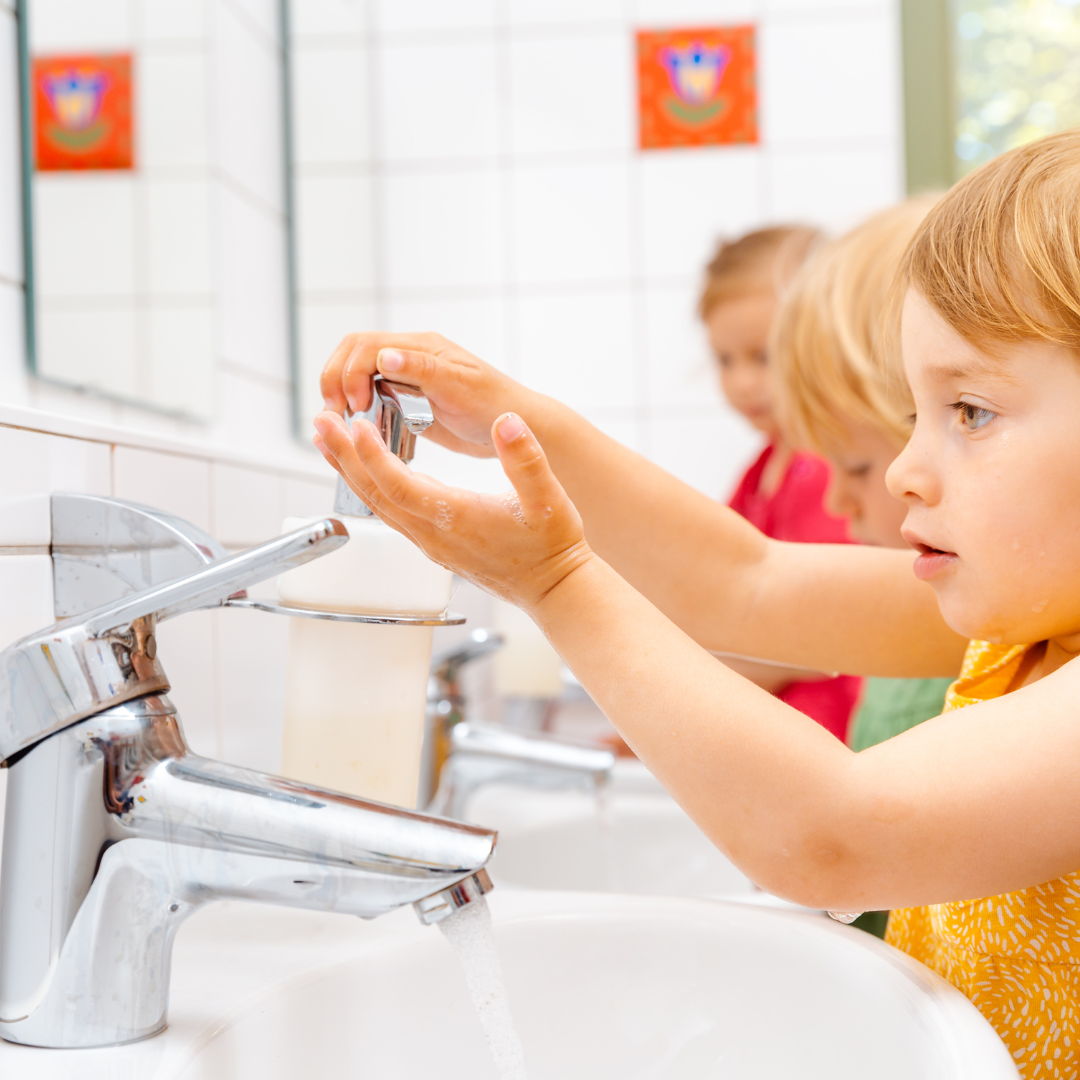 MOST TO LEAST HIERARCHY
LEAST TO MOST HIERARCHY
The level of prompting provided may be determinded by the general approach to skill acquisition. Is the approach directive, investigative, exploratory, reflective or goal directed? Some children will always require additional prompts due to a cognitive, developmental or physical delay. Some children may require a task modification and/or environmental modification. This level of independence with the most suitable level of support should be celebrated as functional. For those of you who are occupational therapists (or other therapists) you may be interested in this resource that I've designed with the prompt hierarchy in mind. The "PROMPT HIERARCHY GOAL AND RECORD SHEETS" may be used as part of an asssesment, to record progress or the use of prompts. The "PROMPT HIERARCHY GOAL AND RECORD SHEETS" include:
These unique pages will assist with report writing! Have you considered how much support your child needs? How much help? How much can they do independently? You can also read more on the JUST RIGHT CHALLENGE where I explain how the child, activity and environment are a balancing act! Until next time,   Cindy is a registered occupational therapist practising in Sydney, Australia. She has two growing children who are a constant source of inspiration and learning. Cindy loves working creatively to help children to reach their potential, finding opportunities in everyday living and making learning fun. She is also addicted to making printables (even when they take a long time to complete). Cindy is the author of the Occupational Therapy blog Your Kids OT. Read more articles from Your Kids OT at https://www.yourkidsot.com/blog
Cindy is a contributing author of the Functional Skills for Kids Therapy Team. They have together published THE HANDWRITING BOOK, THE SCISSORS SKILLS BOOK and THE TOILETING BOOK. The information on this site is general in nature. The activities are safe for most children, however, you should consult an Occupational Therapist or health professional to address specific movement, sensory or other medical conditions. Affiliate links are used throughout this website to promote recommended products. Your Kids OT receives a small commission if any purchases are made through these links. Please see my disclosure policy for more details. Amazon Store: https://www.amazon.com/shop/yourkidsot YKOT shop: https://www.yourkidsot.com/store/c1/Featured_Products.html Teachers Pay Teachers: https://www.teacherspayteachers.com/Store/Your-Kids-Ot You Tube Channel: https://www.youtube.com/channel/UCZUz_5nYEOCkj32DiOCQo4Q/featured Facebook: https://www.facebook.com/yourkidsot Instagram: https://www.instagram.com/yourkidsot/ Pinterest: https://www.pinterest.com.au/yourkidsot/ 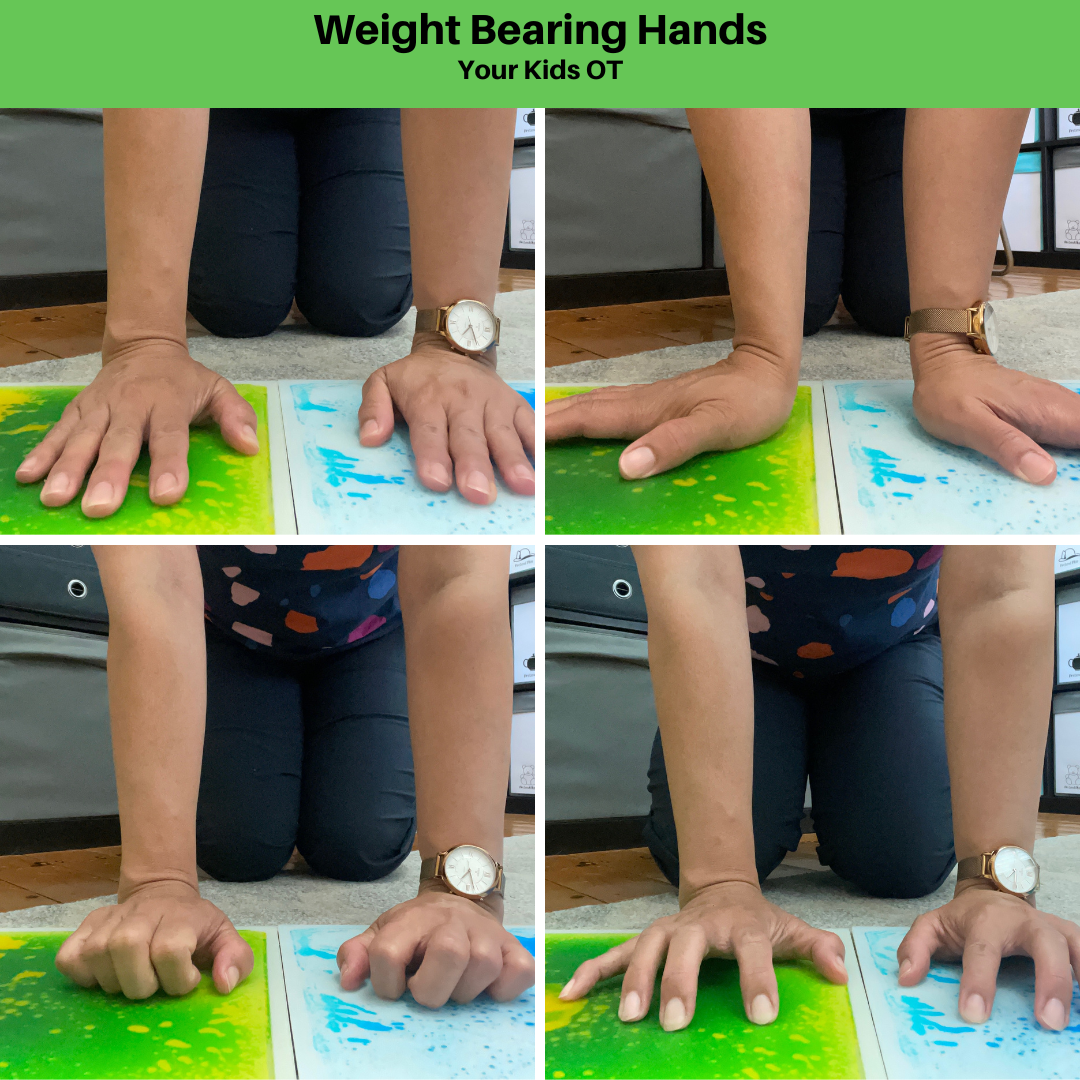 As OTs we are often promoting activities that encourage weight bearing on the hands. This means that weight is transferred from the rest of the body and the child supports their own weight through their upper bodies (shoulders, elbows, wrists and hands). There are wonderful benefits to weight bearing on the hands including increasing proprioceptive and vestibular input (the last few blogs have focused on this) and building upper body strength (shoulder, elbow, wrist and hands). But what does this look like? What are we aiming for? Can we be doing it wrong? Can you spot the differences in the photographs above? 1. Arms extended, hands forward, wrists extended, palms flat. (Top left photograph) This is a great way to build strength and provide sensory input through yoga poses, animal walks, prone activities, crawling, etc. This is what we are aiming for when we are encouraging weight bearing. 2. Arms extended, supination of forearm leading to external rotation of wrists, fingers pointing away from midline. (Top right photograph) Things to check: ability to support forearm and wrist on table during writing, extension of wrist for writing, wrist stability. Some children will rotate their forearms to use their shoulder and/or elbow muscles for stability. This is often a way to compensate for weak wrist muscles. However, suspending one's whole arm can become tiring and also means that only big movements are possible. Finer more controlled movements of the hand (fine motor skills) are best achieved with the dynamic movement of the hand and finger muscles. 3. Arms extended, wrists extended, fingers curled at DIP joints. (Bottom left photograph) Things to check: tactile defensiveness, low tone, shortening/tight finger extensors, retained reflexes (palmar, STNR), wrist strength and stability, development of palmar arches. This is not a fully fisted hand. Rather the fingers are curled over at the Distal Interphalangeal Joint of the fingers (the joint closest to the palm). In my practice as an OT, I'm observing an increasing number of children with this presentation. Some say that it is due to less active children with less exposure to gross motor movements. Some say that retained primitive reflexes need to be addressed as they have not been integrated. Some say that it is an over use of devices that leads to shortening and tightening of the finger muscles. We need to remember that in all movements, children are seeking stability. They do things automatically to protect themselves and to be comfortable. 4. Arms extended, wrists extended, fingers and palms slightly arched. This could be normal protective reflex patterns. This could also reflect strong palmar arches needed for fine motor skills. If so, no change needed. Also check: tactile defensiveness, wrist strength, elbow strength or collapses.  Recommended: ✅Try hand stretches such as pushing both hands together (fingers, palms and wrists touching) or pushing against a wall. ✅Try weight bearing activities through hands on different surfaces and predictable movements for your child. ✅Try moving from commando crawling to four point crawling to static weight bearing (eg. Yoga pose - downward dog). So when you ask your child to do animal walks, push along a scooter board, do a yoga pose.. watch what is happening with their hands, wrists and forearms!   Cindy is a registered occupational therapist practising in Sydney, Australia. She has two growing children who are a constant source of inspiration and learning. Cindy loves working creatively to help children to reach their potential, finding opportunities in everyday living and making learning fun. She is also addicted to making printables (even when they take a long time to complete). Cindy is the author of the Occupational Therapy blog Your Kids OT. Read more articles from Your Kids OT at https://www.yourkidsot.com/blog
Cindy is a contributing author of the Functional Skills for Kids Therapy Team. They have together published THE HANDWRITING BOOK, THE SCISSORS SKILLS BOOK and THE TOILETING BOOK. The information on this site is general in nature. The activities are safe for most children, however, you should consult an Occupational Therapist or health professional to address specific movement, sensory or other medical conditions. Affiliate links are used throughout this website to promote recommended products. Your Kids OT receives a small commission if any purchases are made through these links. Please see my disclosure policy for more details. Amazon Store: https://www.amazon.com/shop/yourkidsot YKOT shop: https://www.yourkidsot.com/store/c1/Featured_Products.html Teachers Pay Teachers: https://www.teacherspayteachers.com/Store/Your-Kids-Ot You Tube Channel: https://www.youtube.com/channel/UCZUz_5nYEOCkj32DiOCQo4Q/featured Facebook: https://www.facebook.com/yourkidsot Instagram: https://www.instagram.com/yourkidsot/ Pinterest: https://www.pinterest.com.au/yourkidsot/ 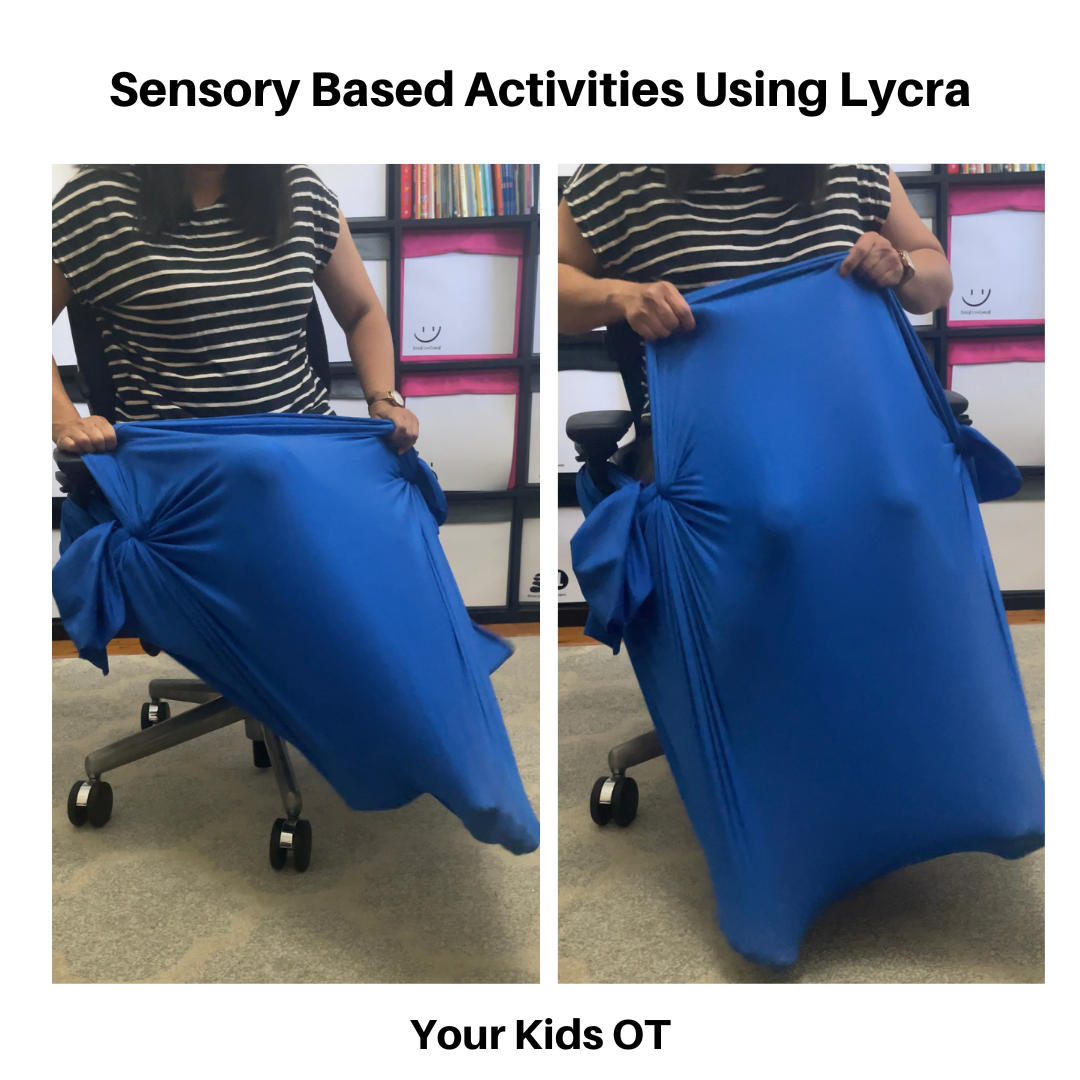 Lycra is the not-so-secret tool in the OT's tool box! Bear hug? Deep pressure massage? Lying in a hammock? Sitting in a soft bean bag? For children who enjoy these sensations, the stretch of lycra can provide propioceptive input to the body as the child moves by pushing and pulling it. They may get the same benefits from using a stretchy resistance band. There are many commercially available products made from lycra (or nylon spandex) including body socks, lyrca tunnels and lycra bed sheets. These are fabulous and I've seen many children benefit from these. Today I want to share with you some new ideas for using just a square of lycra (although if you look closely, you will see that I'm missing a corner)... of approximately 1.4m x 1.4m. You can change the size of your material depending on the size of your child. Watch these ideas below or use the following You-tube link: youtu.be/b0ODU-KhymY Lycra activities 1. Sit and pull 2. Tie to chair legs - Sit and stretch, running legs, read a book, spin 3. Tie to a hoola hoop - Stand and stretch, stand and jump, stand and turn, stand and twist, sit and drive, sit and move legs, sit and hide You could also use a large lycra piece as a hammock or swing. Be very careful where about how you tie this lycra. For weight bearing activities such as these, you may require multiple pieces of lycra, load bearing hooks and attachments. Please seek professional advice if you are making any suspension or weight bearing activities and be aware of potential choking hazards. Use with supervision and caution always! For more on the benefits of sensory based activities, read the blog from last week (link HERE). Let me know if you use any of these ideas or if you have other ways that you use a lycra sheet!   Cindy is a registered occupational therapist practising in Sydney, Australia. She has two growing children who are a constant source of inspiration and learning. Cindy loves working creatively to help children to reach their potential, finding opportunities in everyday living and making learning fun. She is also addicted to making printables (even when they take a long time to complete). Cindy is the author of the Occupational Therapy blog Your Kids OT. Read more articles from Your Kids OT at https://www.yourkidsot.com/blog
Cindy is a contributing author of the Functional Skills for Kids Therapy Team. They have together published THE HANDWRITING BOOK, THE SCISSORS SKILLS BOOK and THE TOILETING BOOK. The information on this site is general in nature. The activities are safe for most children, however, you should consult an Occupational Therapist or health professional to address specific movement, sensory or other medical conditions. Affiliate links are used throughout this website to promote recommended products. Your Kids OT receives a small commission if any purchases are made through these links. Please see my disclosure policy for more details. Amazon Store: https://www.amazon.com/shop/yourkidsot YKOT shop: https://www.yourkidsot.com/store/c1/Featured_Products.html Teachers Pay Teachers: https://www.teacherspayteachers.com/Store/Your-Kids-Ot You Tube Channel: https://www.youtube.com/channel/UCZUz_5nYEOCkj32DiOCQo4Q/featured Facebook: https://www.facebook.com/yourkidsot Instagram: https://www.instagram.com/yourkidsot/ Pinterest: https://www.pinterest.com.au/yourkidsot/ 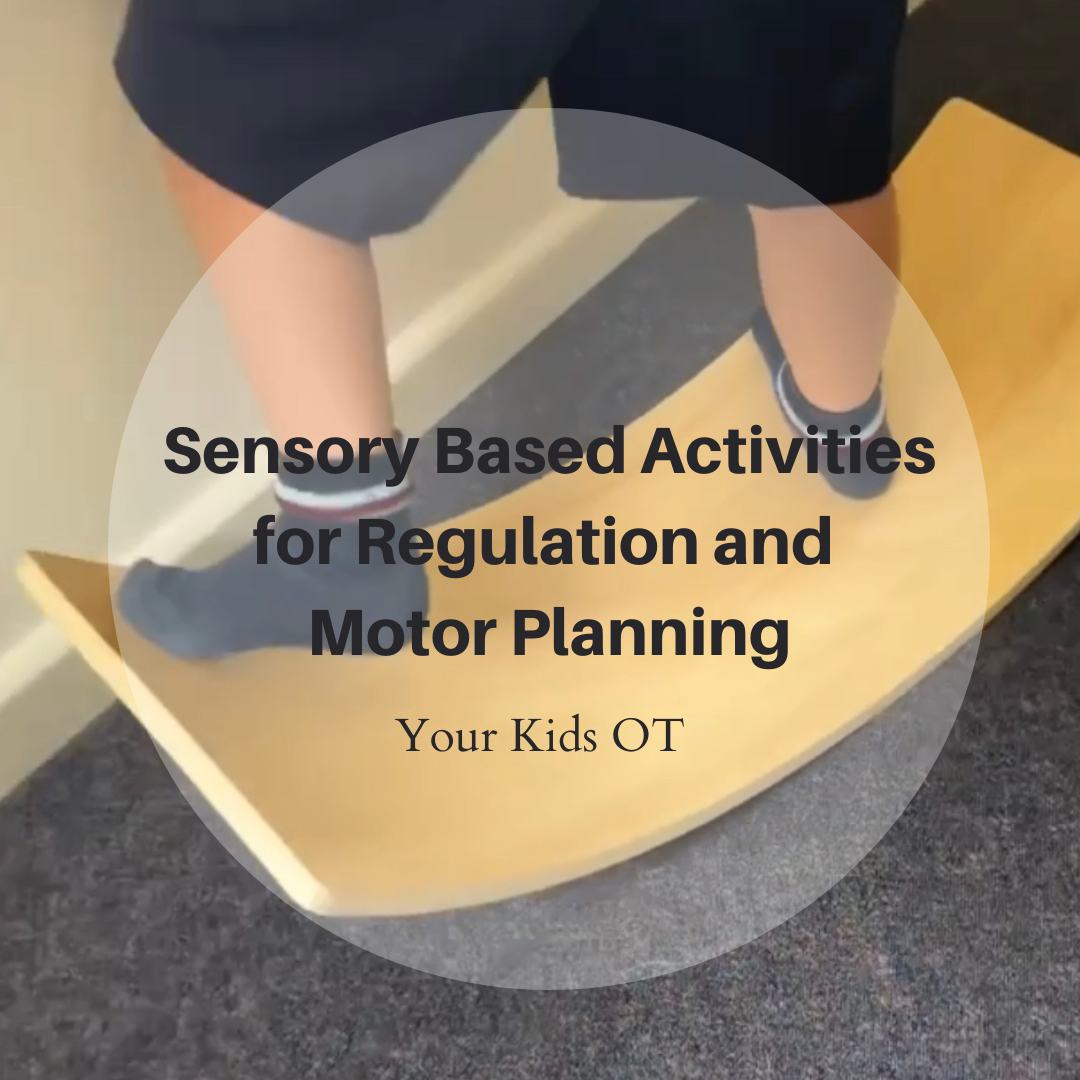 How do sensory based activities relate to regulation and motor planning? What is Dyspraxia and how can we work on this? Let's step back to talk about body awareness and motor planning before we get to these questions! The unconcious awareness of body position (the position of our body parts in relation to each other, other people and objects around us) is called "proprioception". We receive this information about our body from our muscles, tendons, ligaments, joints and connective tissue primarily through movement and touch. We can create a "body scheme" or "body map" or an unconcious body awareness to help us with movement activities. Our vestibular system is developed with information received from the structures in our ears (and head position), to give us an awareness of gravity, movement and posture. Together with vision, we can use our vestibular systems to maintain balance and controlled movement. Hearing and the auditory system are also closing linked with the vestibular system. Our memories of our body map and movement can help with motor planning (ability to ideate, plan, sequence and perform actions). 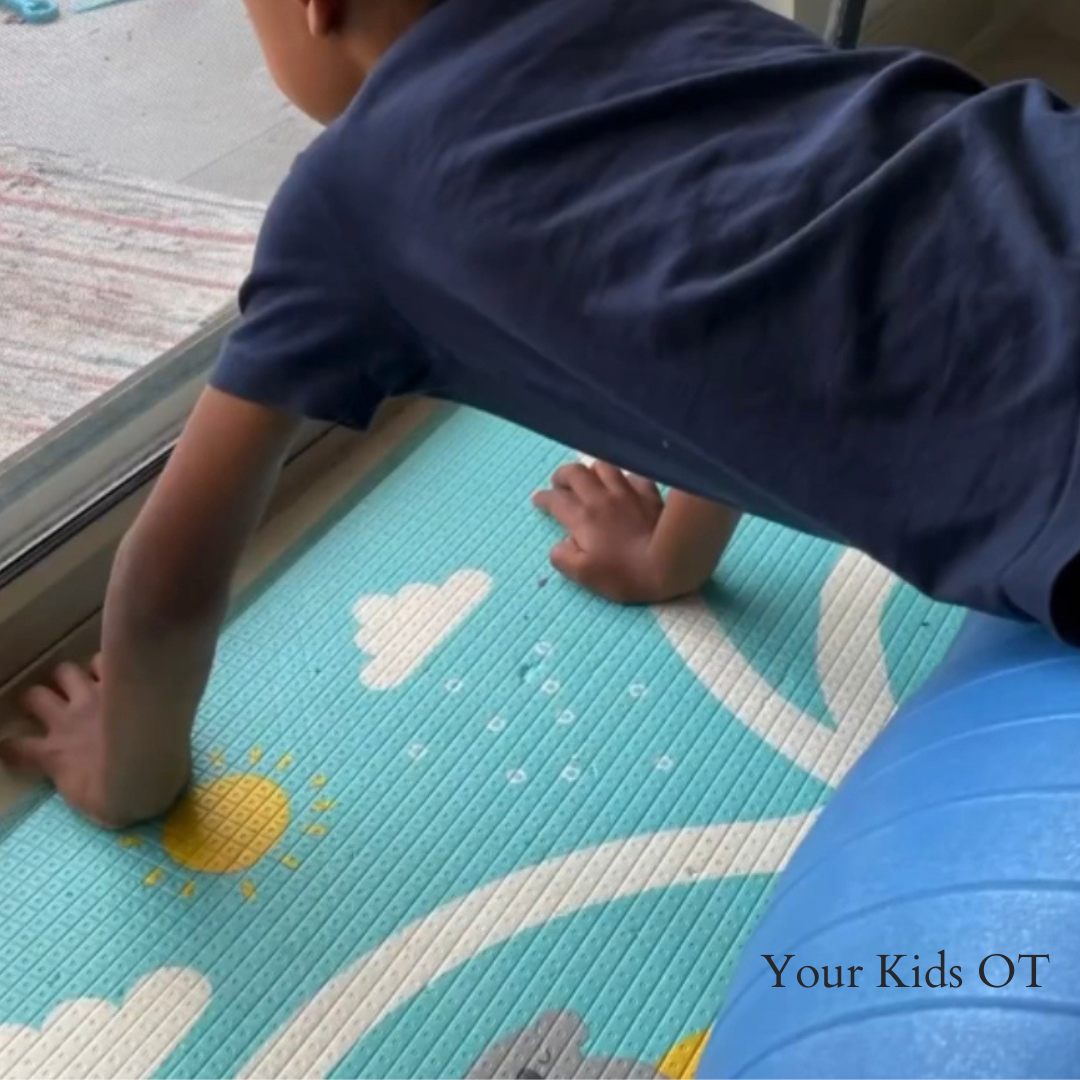 Dyspraxia Motor Dyspraxia is described as a difficulty with the ability to plan skilled or unfamiliar motor tasks. This can involve difficulty with hypothesizing (ideating), sequencing, motor coordination and executing a plan of action. These children can appear "clumsy" (eg. bumping into furniture, tripping over their own feet, falling into other people). Sensory-integrative based dyspraxia is the difficulty one may have with planning motor activities due to poor body scheme (ie. poor prioceptive, tactile and vestibular sensations). The two types of sensory based dyspraxia are described as bilateral integration and sequencing AND somatodyspraxia. Intervention As you can see, addressing difficulties with motor planning, body awareness and regulation are linked with many different aspects of our bodies including proprioception, vestibular input, memory, cognition, vision and hearing. Our bodies are complex and each system is linked to the other. When we use a "top down" approach, we may go straight to addressing the cognitive aspects of motor planning (setting a goal, making a plan, sequencing steps, checking our plan). One strategy can be found HERE (Goal Plan Do Check). A "bottom up" approach looks at some of the foundations of the central nervous system and sensory systems. You can read more about this with the Pryamid of Learning HERE. We will focus on proprioception and the vestibular systems today. Proprioception Proprioceptive activities that require muscle stretching and activation often involve some resistance or "heavy" work where the body and nervous system receives lots of information. These activities can have either a calming or alerting affect depending on the person and they can also help with regulating arousal levels. You can increase proprioceptive activities by incorporating lots of pushing, pulling, throwing, bending and stretching actions. Work on increasing the weight your child can manage or using your child's own body weight in activities. Vestibular Some vestibular activities are known to be calming such as slow rocking linear movements compared with quick rotational movements which can arouse/alert the nervous system. When we include a sequence of steps, following a pattern or working towards a target (goal); we are also including a cognitive load or "planning" part of the process. 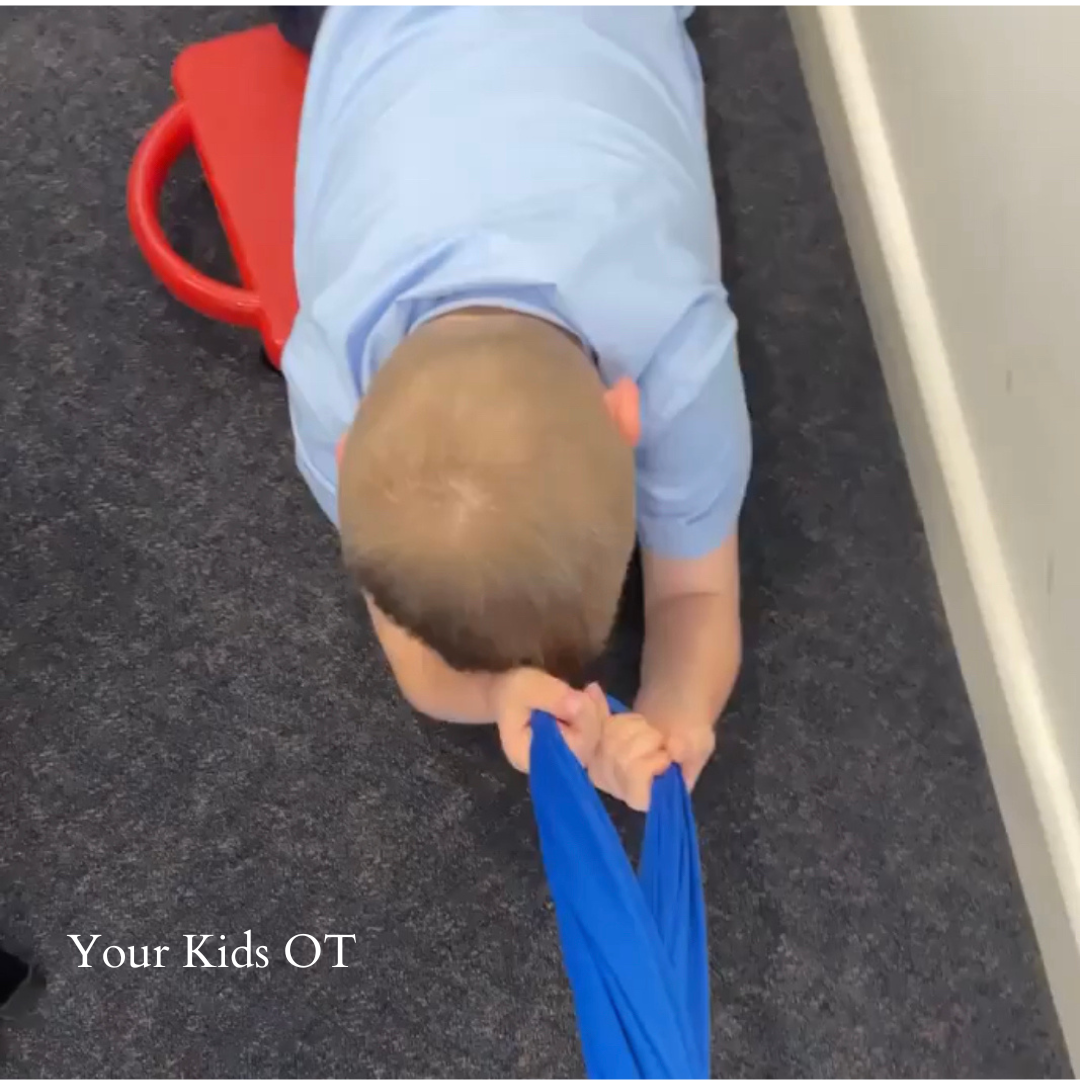 Create your own sensory based obstacle courses in your home using the FREE printable. You can choose the activities that best suit your child, reprint pages where you want an activity to be repeated, lay them around your home using furniture and rooms to guide choices. Involve your child for the best results! Watch this obstacle in action HERE. I love using resistance activities that involve lycra (or commercially available as nylon spandex. Join me in the next blog as I show you different ways you can use this material without having to sew! What are your favourite sensory based activities for regulation and motor planning?  Cindy is a registered occupational therapist practising in Sydney, Australia. She has two growing children who are a constant source of inspiration and learning. Cindy loves working creatively to help children to reach their potential, finding opportunities in everyday living and making learning fun. She is also addicted to making printables (even when they take a long time to complete). Cindy is the author of the Occupational Therapy blog Your Kids OT. Read more articles from Your Kids OT at https://www.yourkidsot.com/blog Cindy is a contributing author of the Functional Skills for Kids Therapy Team. They have together published THE HANDWRITING BOOK, THE SCISSORS SKILLS BOOK and THE TOILETING BOOK. The information on this site is general in nature. The activities are safe for most children, however, you should consult an Occupational Therapist or health professional to address specific movement, sensory or other medical conditions. Affiliate links are used throughout this website to promote recommended products. Your Kids OT receives a small commission if any purchases are made through these links. Please see my disclosure policy for more details. Amazon Store: https://www.amazon.com/shop/yourkidsot YKOT shop: https://www.yourkidsot.com/store/c1/Featured_Products.html Teachers Pay Teachers: https://www.teacherspayteachers.com/Store/Your-Kids-Ot You Tube Channel: https://www.youtube.com/channel/UCZUz_5nYEOCkj32DiOCQo4Q/featured Facebook: https://www.facebook.com/yourkidsot Instagram: https://www.instagram.com/yourkidsot/ Pinterest: https://www.pinterest.com.au/yourkidsot/ ** References:
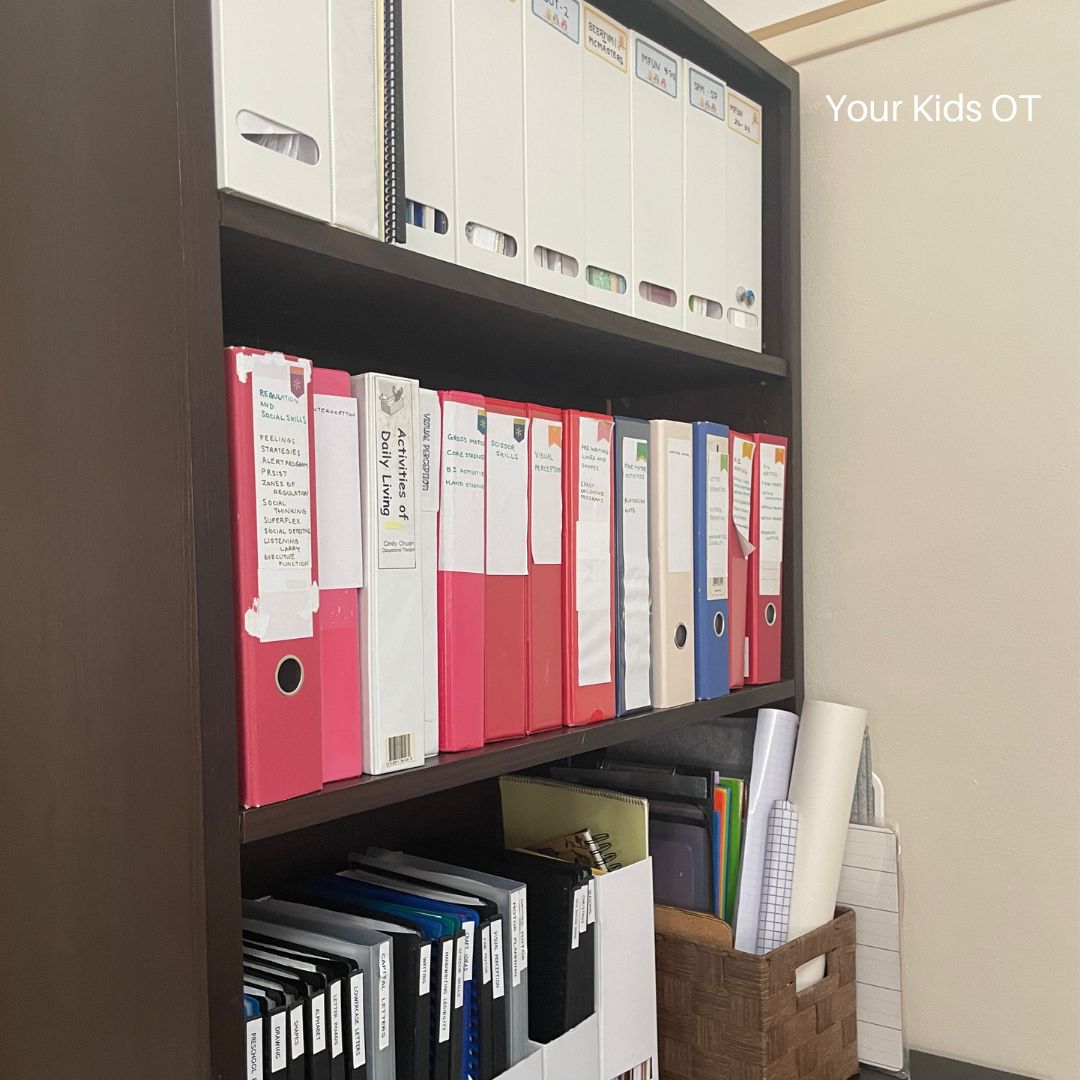
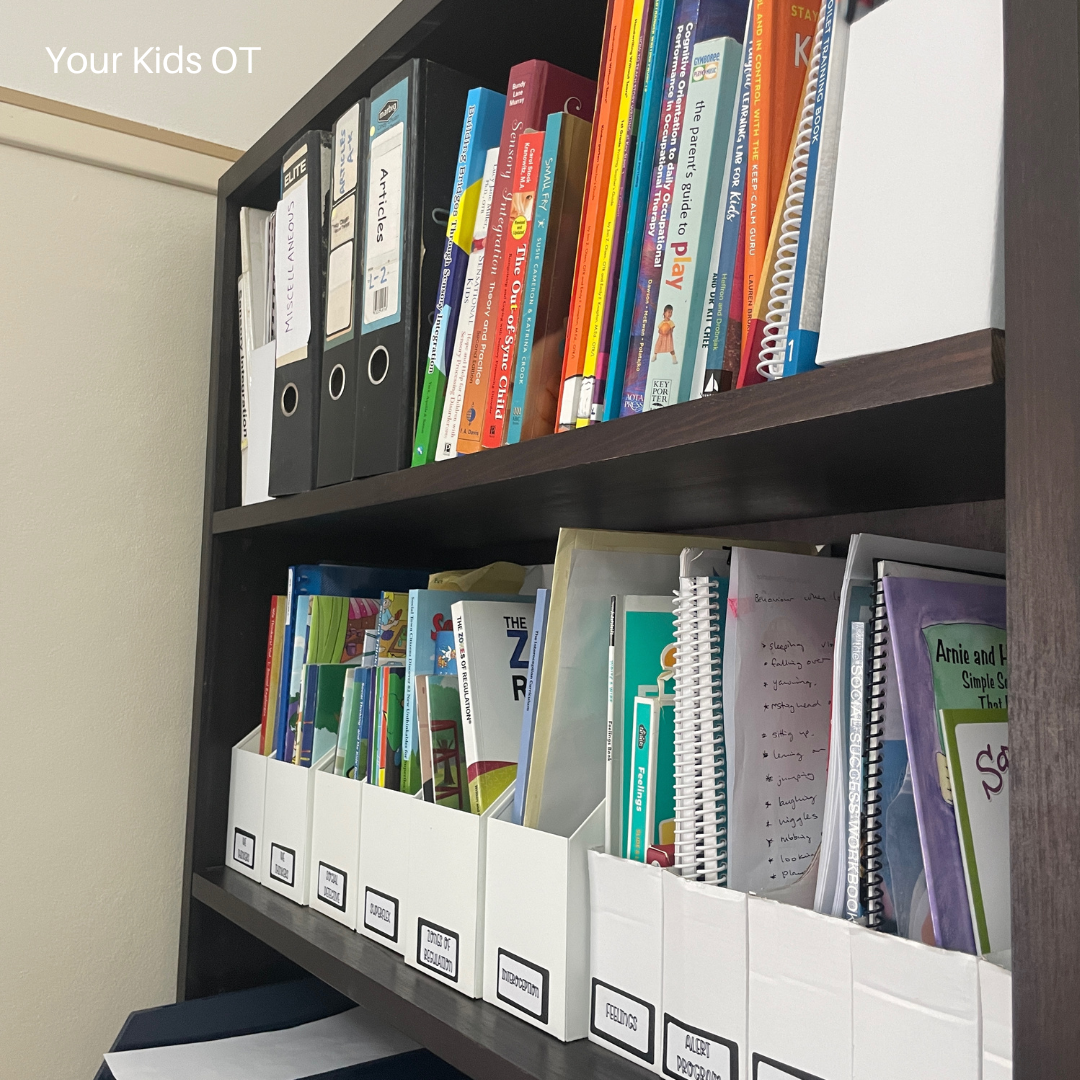
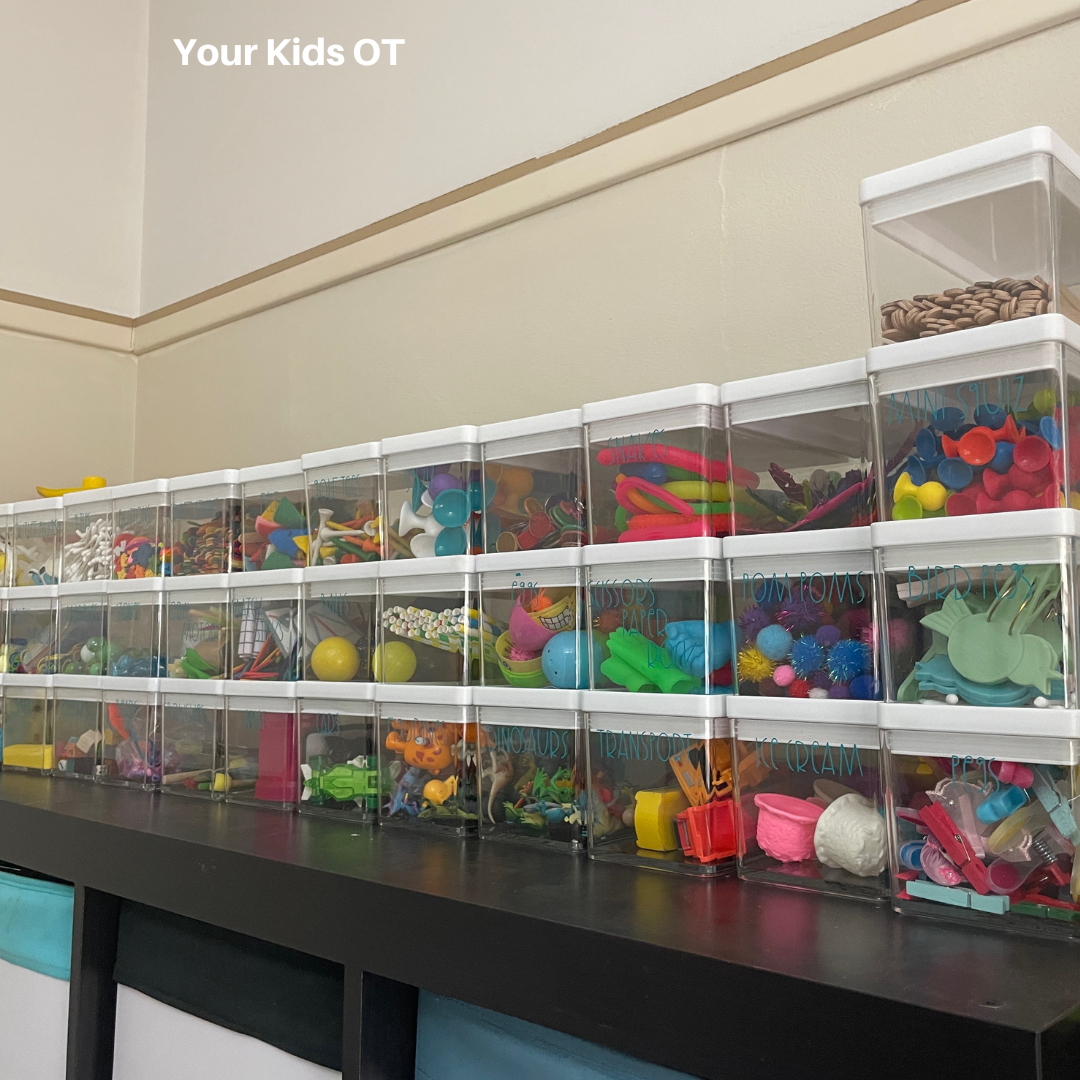
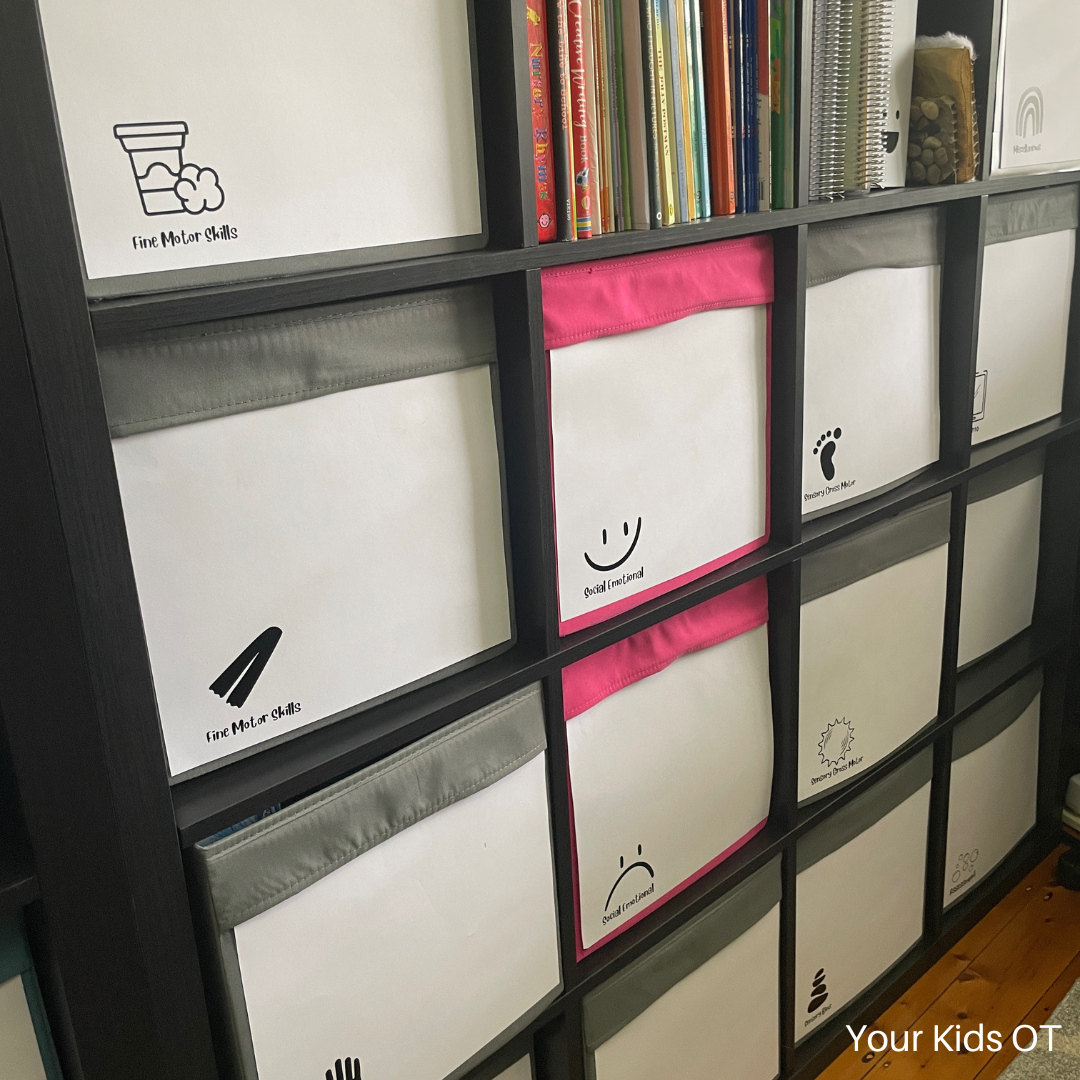
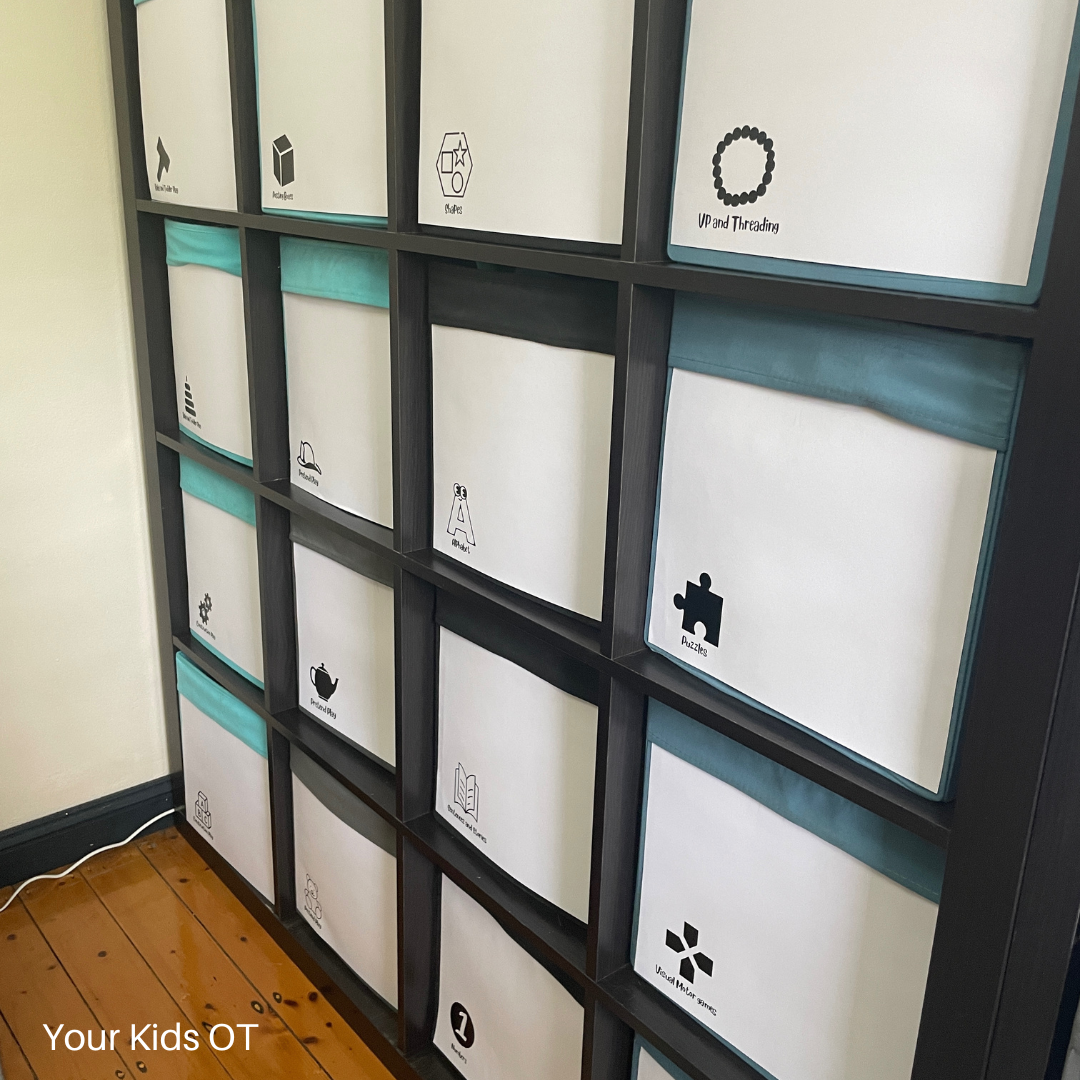
Bundy, A.C. et al. (2020) Sensory integration: Theory and practice. Philadelphia: F.A. Davis. Yack, E., Aquilla, P. and Sutton, S. (2015) Building Bridges through Sensory Integration: Therapy for children with autism and other pervasive developmental disorders. United States: Sensory World. 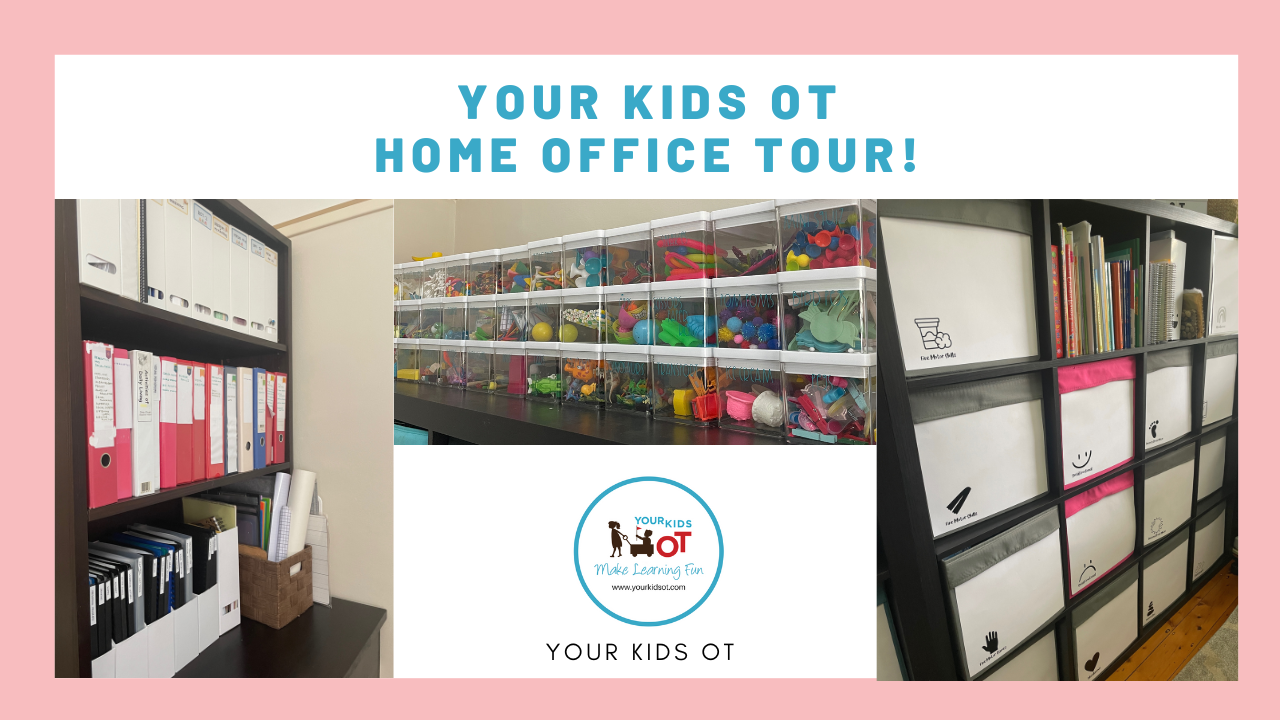 This is a much requested and much anticipated look at my home office as I have shown sections of my space over the years. January is the best time for me to do this video as it is when my office is used the least (and therefore the neatest it ever is!). For context, I am a practising paediatric occupational therapist who works "mobile" visiting homes, preschools and schools. This home office is used for my own requirements and is not shared with other therapists (although I have enough resources to share). I don't see any children in my home. There are some supplies, toys and resources that my own children will use within this room. This room tour is not a "shopping list" and the resources gathered have been a result of many years of practice with a range of children. I am a big fan of Cas from "Clutterbug" and through her quiz have discovered my organisational styles. I am a predominantly a "bee", a visual organizer who likes to see their everyday used items out in the open. Bees also tend to be perfectionists who like a detailed organizing system, with many categories for their things. A Bee struggles more than any other type with letting go (hmm, this is true). However, I also like to hide some of my storage away like a "cricket". Crickets are hidden organizers who prefers to have their items stored behind closed doors. They are also detail oriented and like to sort their items into many, small categories. A Cricket doesn’t mind stopping to open a lid or sort items when putting things away. If I didn't hide away some of my resources, I think I would feel overwhelmed in this space. Since finding the systems that work for me, it makes it a lot easier for me to plan for my sessions as this all needs to be done before I head out the door. I tend to plan for the week ahead with an assortment of therapy bags. I group similar children when planning my sessions/bags. (eg. developmental delay/younger children, early writers, regulation/social skills and older writers). I use toys/resources that can be adapted with levelling up or simplifying activities as needed. The full home office tour is available on this you tube video (use this link if you can't see it below)... https://youtu.be/b8S0Pi4Uxc4 As I mentioned in the video, I store some larger gross motor equipment (balance boards, peanut ball, etc) in my garage so that I can pop them directly into my car on the way out to my sessions. This room will always be a work in progress as my practice changes and as I continue to work. I would gradually like to update some of the handwritten signs on folders and declutter some resources. With the current storage, I aim to shop less this year and "shop" my own resources before seeking them elsewhere (although I do need some new wikki stix). Another goal for myself is to check worksheets that I have already printed before printing new ones! Do you like a good organisation system? Are you a bee, a cricket or something else? I know that I didn't show you all the contents of every container (that would have taken too long for this video). Let me know if you would like a closer look at any resources. If you follow me on social media, you will see items that I use frequently!  Cindy is a registered occupational therapist practising in Sydney, Australia. She has two growing children who are a constant source of inspiration and learning. Cindy loves working creatively to help children to reach their potential, finding opportunities in everyday living and making learning fun. She is also addicted to making printables (even when they take a long time to complete). Cindy is the author of the Occupational Therapy blog Your Kids OT. Read more articles from Your Kids OT at https://www.yourkidsot.com/blog
Cindy is a contributing author of the Functional Skills for Kids Therapy Team. They have together published THE HANDWRITING BOOK, THE SCISSORS SKILLS BOOK and THE TOILETING BOOK. The information on this site is general in nature. The activities are safe for most children, however, you should consult an Occupational Therapist or health professional to address specific movement, sensory or other medical conditions. Affiliate links are used throughout this website to promote recommended products. Your Kids OT receives a small commission if any purchases are made through these links. Please see my disclosure policy for more details. Amazon Store: https://www.amazon.com/shop/yourkidsot YKOT shop: https://www.yourkidsot.com/store/c1/Featured_Products.html Teachers Pay Teachers: https://www.teacherspayteachers.com/Store/Your-Kids-Ot You Tube Channel: https://www.youtube.com/channel/UCZUz_5nYEOCkj32DiOCQo4Q/featured Facebook: https://www.facebook.com/yourkidsot Instagram: https://www.instagram.com/yourkidsot/ Pinterest: https://www.pinterest.com.au/yourkidsot/ 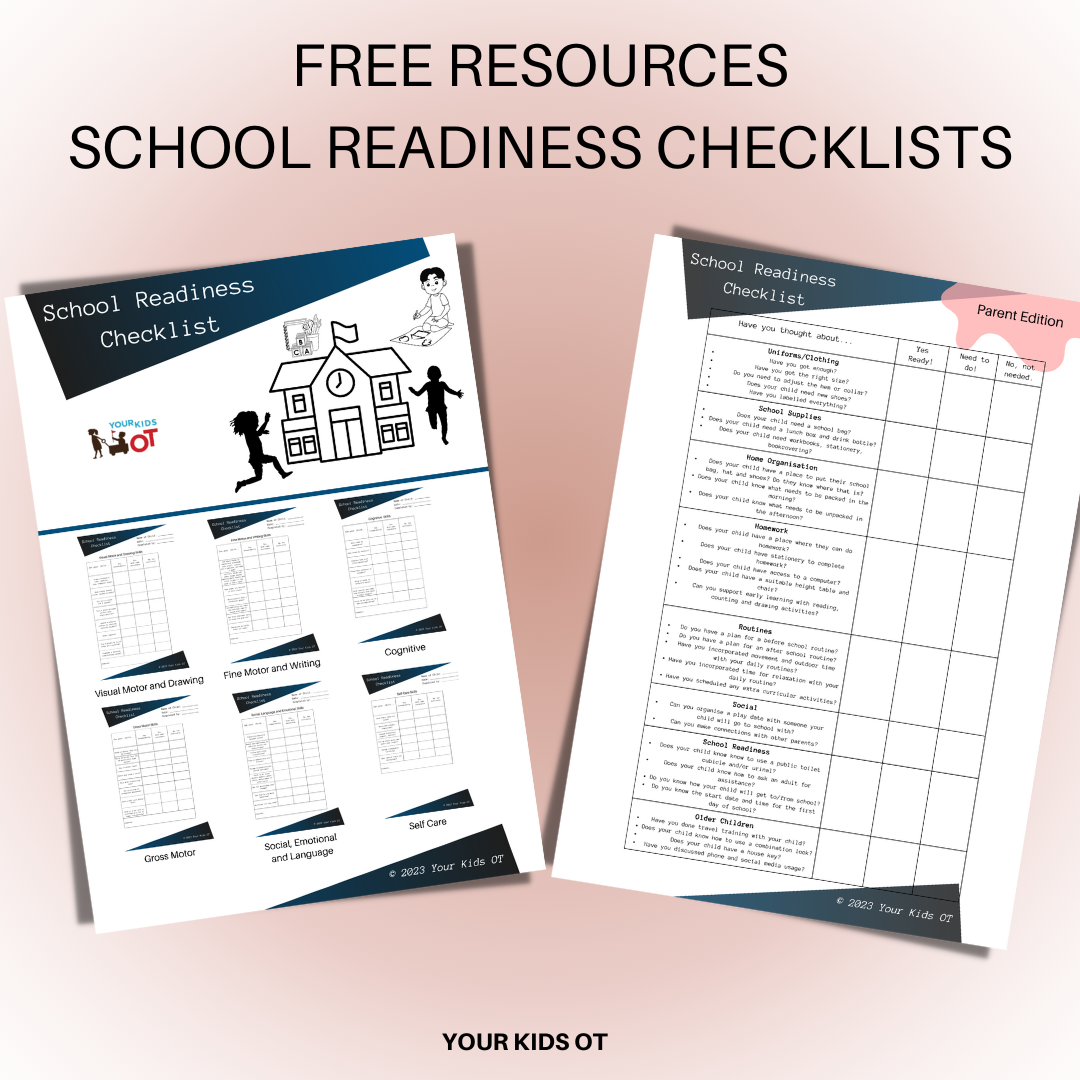 January is when Australians start to think about returning to school after a wonderful summer break. From the sand between our toes, fun with family, carefree days .... to backpacks, uniforms, lunch boxes and shoes! Whether you are 2 weeks, 2 months or 12 months away from starting school, this is still for you! School readiness can mean many different things to different people. I have a host of articles that talk about school readiness which I'll leave links to below. This year I have updated my popular "school readiness checklist" (originally created in 2014). The content in this newer version is slightly adjusted and presented with a new design. The information in the checklist is based from standardised tests includine the HELP 3-6 Checklist, The Miller Function & Participation Scales, The Peabody Developmental Motor Scales and the Beery VMI (Visual-Motor Integration). The checklist is not exhaustive and was developed to provide a snapshot of where you child is currently performing and what they may need help with completing. Language is only briefly touched on and you should seek advice from a speech therapist if you have concerns with your child's receptive or expressive language. It would be appropriate to use this checklist in the year before your child begins formal schooling. The school readiness checklist was compiled to provide an overview of a child’s visual motor skills, fine motor and pre-writing skills, gross motor skills, cognitive and problem solving skills, social, language and emotional skills, and self-care (independence) skills. There is a wide range of expectations for children beginning formal schooling and this may change from one local area to another. The starting age for school may also vary depending on your state or country of residence. Terms of use: This checklist should be used as a guide only. This school readiness checklist is not a standardised test and can not be used to gauge age-norms. It this therefore not appropriate for use in research projects. This checklist may be used by parents, educators and health professionals for their own use with a child or children in their care. This checklist should not be distributed. Further free copies may be obtained from Your Kids OT. If you have concerns with your child's development, please contact your local health professional for an assessment of your child's individual needs. Being a parent of a child starting school for the first time can be daunting. What do we need? What do we need to set up at home? How can we help our children transition to school without tears and tantrums. Planning ahead is an important step for parents and I have created a checklist for you too! This is also a free printable available at the YKOT shop. A special section for older children is included with this checklist. My youngest child is starting highschool and this transition can be just as daunting if not more so that starting Kindergarten. For more information on school readiness:
  Cindy is a registered occupational therapist practising in Sydney, Australia. She has two growing children who are a constant source of inspiration and learning. Cindy loves working creatively to help children to reach their potential, finding opportunities in everyday living and making learning fun. She is also addicted to making printables (even when they take a long time to complete). Cindy is the author of the Occupational Therapy blog Your Kids OT. Read more articles from Your Kids OT at https://www.yourkidsot.com/blog Cindy is a contributing author of the Functional Skills for Kids Therapy Team. They have together published THE HANDWRITING BOOK, THE SCISSORS SKILLS BOOK and THE TOILETING BOOK. The information on this site is general in nature. The activities are safe for most children, however, you should consult an Occupational Therapist or health professional to address specific movement, sensory or other medical conditions. Affiliate links are used throughout this website to promote recommended products. Your Kids OT receives a small commission if any purchases are made through these links. Please see my disclosure policy for more details. Amazon Store: https://www.amazon.com/shop/yourkidsot YKOT shop: https://www.yourkidsot.com/store/c1/Featured_Products.html Teachers Pay Teachers: https://www.teacherspayteachers.com/Store/Your-Kids-Ot You Tube Channel: https://www.youtube.com/channel/UCZUz_5nYEOCkj32DiOCQo4Q/featured Facebook: https://www.facebook.com/yourkidsot Instagram: https://www.instagram.com/yourkidsot/ Pinterest: https://www.pinterest.com.au/yourkidsot/ You may also like:
Looking back always helps with looking forward!
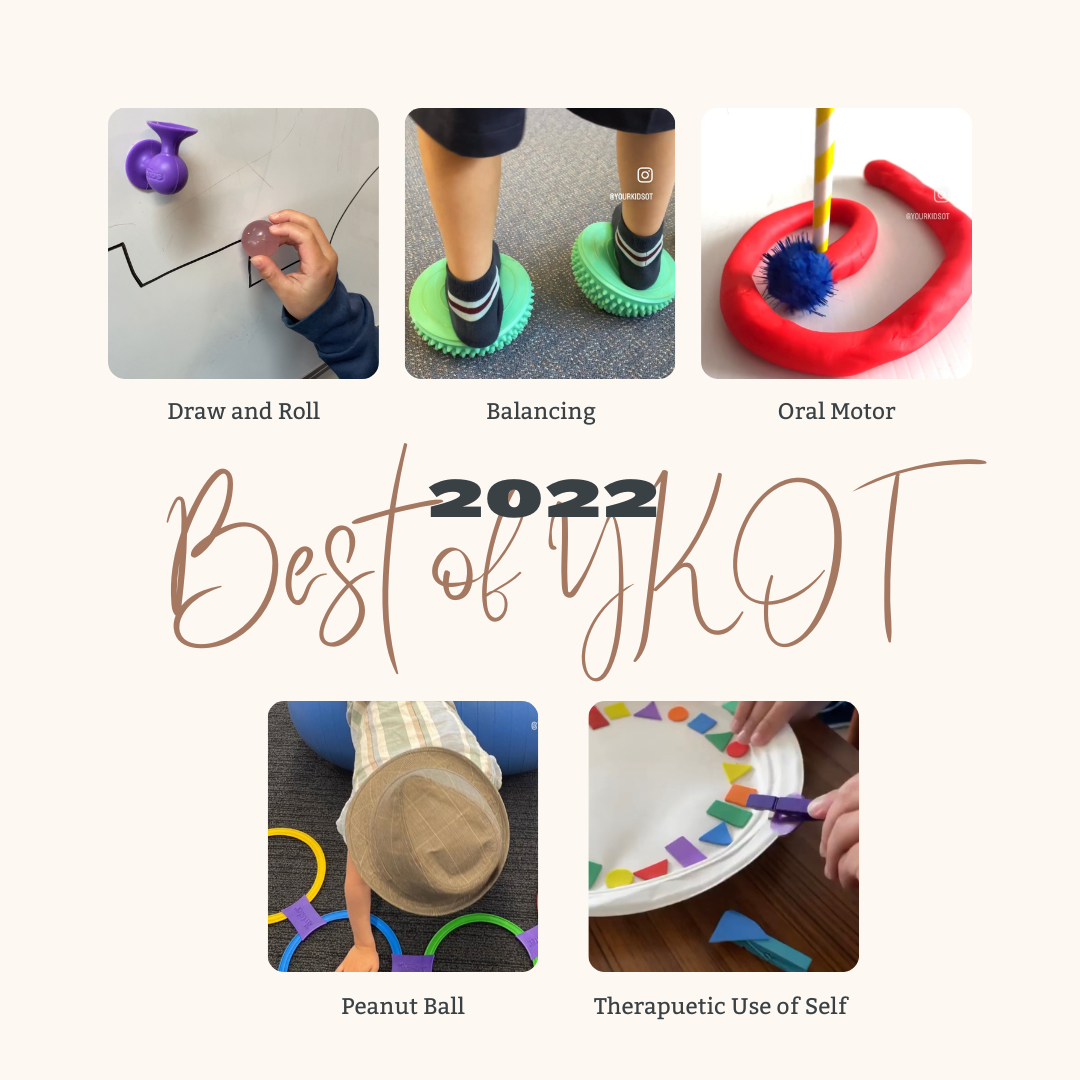
As 2022 draws to a close, I look back on the year. The first year back to complete face to face direct occupational therapy services post pandemic. The nasty virus continued to play havoc to attendance, although to-date I'm still a "no-vid". If you are new to Your Kids OT, you may not know that I'm an sole mobile private OT based in Sydney Australia. I find it hard to say "no" but I'm getting better at it. The year started with a very very very full client load which is always exciting, however it did mean that I need to balance this with my blog here at YKOT, social media, online shop and TPT. At one point, I was visiting 11 different schools, 2 preschools, a child care centre as well as several home visits weekly. You will find me almost daily uploading to Instagram which is now my preferred platform, where I have shared over 1700 posts in the last 8 years. I share candidly, the activities that I have been doing, what I've packed in my OT bag (which has become a popular weekly feature) and some behind the scenes things that I enjoy. Many of you like to know the real-me, popping into IG stories to see my dog, my baking, my scenic walks... and ideas that I've shared in my memories from the past. This newsletter and blog is a platform that I use to share more detail. I place my free and new printables here on the YKOT website so that there is a reference point. There are 31 freebies scattered here through blog posts and at the YKOT shop which continue to be very popular. Which is your favourite? Each year, I collaborate with other therapy bloggers or whilst I don't necessarily seek new opportunities, I've had the pleasure of trying a few new things over the last few years. In 2022, I was interviewed for A Current Affair (a Australian National News Program) to provide an OT opinion on risky play at playgrounds. The top 5 activities in 2022 voted by your views and likes on IG are: 5. Draw and Roll - Using a vertical whiteboard to draw a path and using squigz to work on wrist stregnth and fine motor skills. Read more HERE and HERE. 4. Balancing on Foot Pods - I like to look at "old" tools and try new things. Here I upturned the footpods to add more of a challenge to balance, adding pop tubes for motivation. Read more HERE. To increase the challenge, I added a "figure 8" between the legs for some children. Read more HERE. 3. Oral Motor Activities and Playdough - Breathing is an important tool for regulation. Here I used playdough and pom poms to create child-friendly oral motor activities. Reaad more HERE. 2. Therapeutic use of self - We can't escape the draw of games and apps on devices for our children. Here I used myself to engage a child with an activity with the inspiration coming from technology. I used my voice to increase in volume and this provided feedback to the child in an engaging way. The shape peg paper plate activity was intrinsically motivating for most but this addition of sound helped one child in particular to give it a go. Read/listen more HERE. 1. Peanut Ball Ring Game - By far the most popular activity of the year! A combination of gross motor skills, core muscle strength, shoulder stability, neck muscle strengthening, motor planning, sequencing, active listening, completing a multiple-step activity whilst providing an engaging activitiy for children! Read more HERE. Click the links above for a more detailed look at the activities or watch the video below for a summary! ​I love sharing my ideas with you here on this corner of the internet. I aim to be personable, relatable, practical with my (almost 25 years) experience evident in all that I do. This will no doubt mean that I share irregularly but I would rather not bombard you with emails for the sake of it. Your Kids OT is built on my reputation and I thank you for your ongoing support. (PS. If it is not for you, then I'm never offended if you unsubscribe.) I'm not here just for the numbers but honestly want to make a difference with what I do share. So, thank you again for those who have been around for a while and welcome to those who are new here! Looking forward to sharing more simple ways to make learning fun for your children in 2023. Happy New Year! ​ 
Cindy is a registered occupational therapist practising in Sydney, Australia. She has two growing children who are a constant source of inspiration and learning. Cindy loves working creatively to help children to reach their potential, finding opportunities in everyday living and making learning fun. She is also addicted to making printables (even when they take a long time to complete). Cindy is the author of the Occupational Therapy blog Your Kids OT. Read more articles from Your Kids OT at https://www.yourkidsot.com/blog
Cindy is a contributing author of the Functional Skills for Kids Therapy Team. They have together published THE HANDWRITING BOOK, THE SCISSORS SKILLS BOOK and THE TOILETING BOOK. ​The information on this site is general in nature. The activities are safe for most children, however, you should consult an Occupational Therapist or health professional to address specific movement, sensory or other medical conditions. Affiliate links are used throughout this website to promote recommended products. Your Kids OT receives a small commission if any purchases are made through these links. Please see my disclosure policy for more details. ​​​ Amazon Store: https://www.amazon.com/shop/yourkidsot YKOT shop: https://www.yourkidsot.com/store/c1/Featured_Products.html Teachers Pay Teachers: https://www.teacherspayteachers.com/Store/Your-Kids-Ot You Tube Channel: https://www.youtube.com/channel/UCZUz_5nYEOCkj32DiOCQo4Q/featured Facebook: https://www.facebook.com/yourkidsot Instagram: https://www.instagram.com/yourkidsot/ Pinterest: https://www.pinterest.com.au/yourkidsot/ ​ 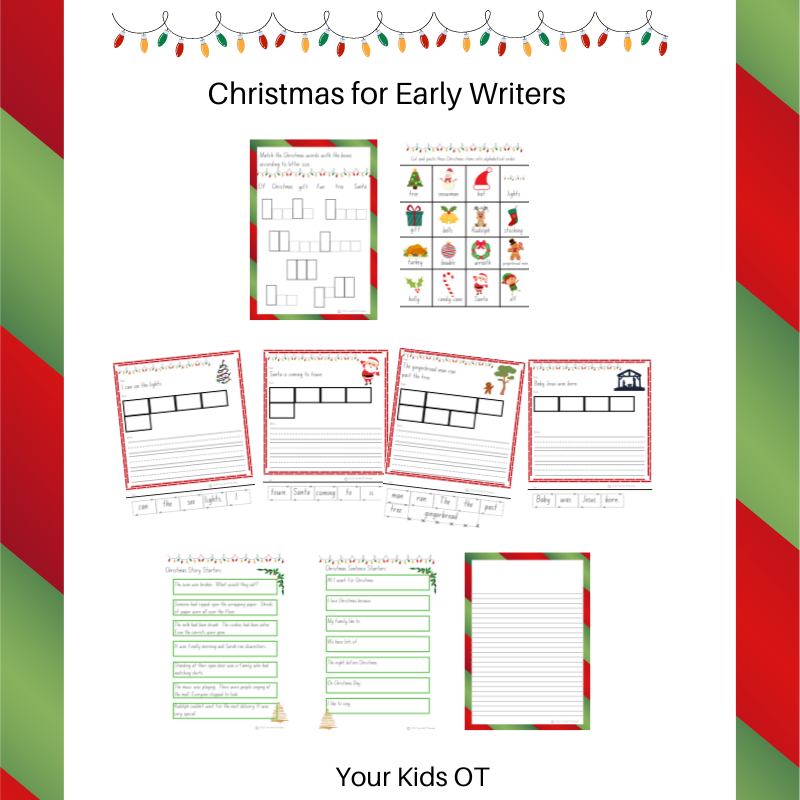 It wouldn't be Christmas over here at YOUR KIDS OT without a FREE PRINTABLE. I have to admit that I wasn't sure that I would get one out to you this year, but my "early writers" were in need of some fresh ideas AND you benefit too! The 2022 Christmas FREE PRINTABLE pack includes the following pages:
Use the link below to get your copy! It's fun to bring the festive season into therapy sessions and you could easily do these at home with your early writers too. If you like these sorts of printables, you will find similar here in the Your Kids OT Shop.
If you prefer, head over to the YKOT store on Teachers Pay Teachers for $US. MERRY CHRISTMAS! Wishing you a restful and joyful holiday season! Thank you for your ongoing support of YKOT !  Cindy is a registered occupational therapist practising in Sydney, Australia. She has two growing children who are a constant source of inspiration and learning. Cindy loves working creatively to help children to reach their potential, finding opportunities in everyday living and making learning fun. She is also addicted to making printables (even when they take a long time to complete). Cindy is the author of the Occupational Therapy blog Your Kids OT. Read more articles from Your Kids OT at https://www.yourkidsot.com/blog
Cindy is a contributing author of the Functional Skills for Kids Therapy Team. They have together published THE HANDWRITING BOOK, THE SCISSORS SKILLS BOOK and THE TOILETING BOOK. The information on this site is general in nature. The activities are safe for most children, however, you should consult an Occupational Therapist or health professional to address specific movement, sensory or other medical conditions. Affiliate links are used throughout this website to promote recommended products. Your Kids OT receives a small commission if any purchases are made through these links. Please see my disclosure policy for more details. Amazon Store: https://www.amazon.com/shop/yourkidsot YKOT shop: https://www.yourkidsot.com/store/c1/Featured_Products.html Teachers Pay Teachers: https://www.teacherspayteachers.com/Store/Your-Kids-Ot You Tube Channel: https://www.youtube.com/channel/UCZUz_5nYEOCkj32DiOCQo4Q/featured Facebook: https://www.facebook.com/yourkidsot Instagram: https://www.instagram.com/yourkidsot/ Pinterest: https://www.pinterest.com.au/yourkidsot/ |
AuthorHi, I'm Cindy and I am an Occupational Therapist. I enjoy working creatively with children to see them reach their potential. Read more about me here. 
SEARCH THIS SITE
Archives
April 2024
Categories
All
Popular Posts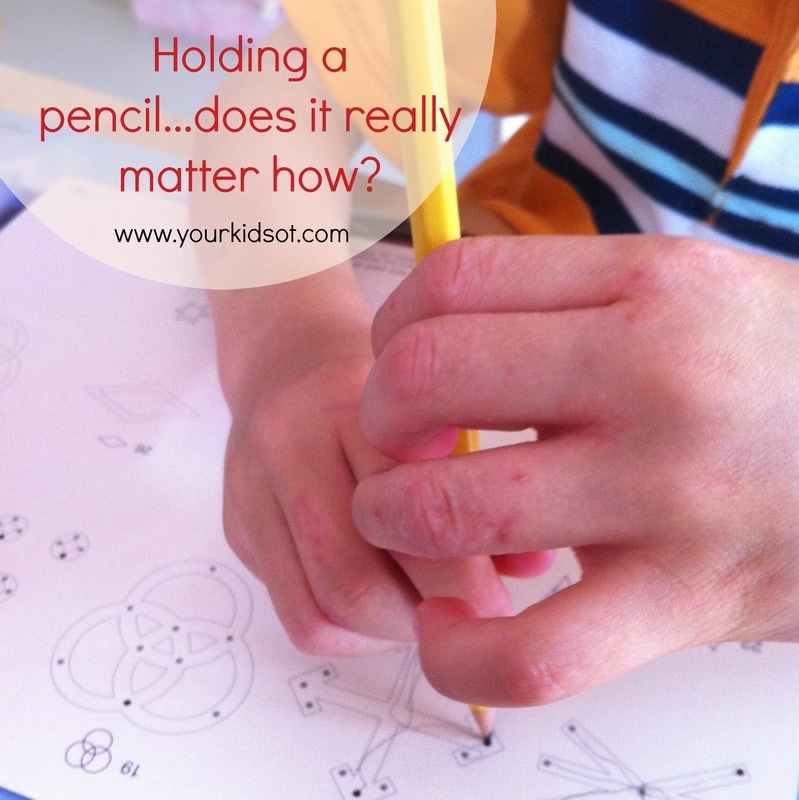
 |
 RSS Feed
Join the YKOT e-newsletter!
Subscribe to get our latest content by email and receive
the SHAPE ROADS PRINTABLE NOW!

Success! Now check your email to confirm your subscription and receive your free printable!
Join our Mailing List!
Subscribe to get our latest content by email and receive
the SHAPE ROADS PRINTABLE NOW as a thankyou!
Success! Now check your email to confirm your subscription and receive your free printable!
Disclaimer: The information on this site is general in nature and should be used for educational and entertainment purposes. The activities are safe for most children, however, you should consult an Occupational Therapist or health professional to address specific movement, sensory or other medical conditions. This blog does not replace formal therapeutic professional advice given by a health professional or medical practitioner. Reviews and endorsements of products will only be made based on my expertise and personal opinion; and deemed worthy of such endorsement. The opinions shared in sponsored content will always be my own and not that of the advertising company or brand. Content, advertising space or posts will be clearly identified if paid, affiliated or sponsored. Affiliate links may be found throughout this website in advertising. This means that if you follow through with a purchase from these links, Your Kids OT will receive a percentage of the sale. Your Kids OT undertakes to meet the requirements of the "Social Media Policy" as published by Australian Health Practitioner Regulation Agency (AHPRA). Further information about this policy can be found here.
Find meFollow me |
|
About me
AuthorHi, I'm Cindy and I am an Occupational Therapist. I enjoy working creatively with children to see them reach their potential. Read more about me here. 
|
Copyright © 2017 Your Kid OT